As a non-magnetic drill collars supplier who’s spent the last 12 years walking rig floors, troubleshooting field issues, and sitting through late-night technical calls with drilling superintendents, I’ve heard every iteration of the same question: “Why’d our LWD tool give a skewed reading again? We swapped out the magnetic drill collars last week, and it was fine for six months.” Nine times out of 10, the answer traces back to one variable that’s easy to overlook in the chaos of drilling operations: temperature. Non-magnetic drill collars are engineered explicitly to eliminate the magnetic interference that ruins logging while drilling (LWD) and measurement while drilling (MWD) data—something standard steel drill collars can’t do, because their high magnetic permeability messes with the tiny sensors in downhole tools. But here’s the part no basic training manual spends enough time on: their performance shifts dramatically with temperature, and ignoring that cost us a customer a couple years back when a 300°F reservoir turned our premium collars into a data distorter. Let’s break this down, the way I do when I’m huddled around a rig’s break room table with a drilling engineer, not the way a textbook writes it. Non-Magnetic Drill Collars
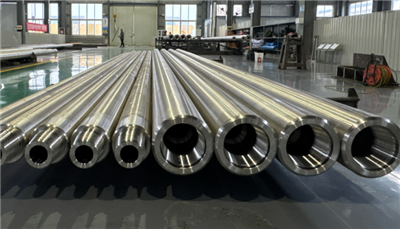
First, let’s get back to basics on what makes non-magnetic drill collars work, because you can’t talk about temperature effects without grounding that foundation. Most of our collars are made from a high-alloy austenitic stainless steel—we source it from a mill in Germany that’s been perfecting the formula for 40 years, specifically adjusted for drilling’s unique demands. Austenitic stainless is non-magnetic at room temperature, that’s non-negotiable: its atomic structure doesn’t have the aligned electron domains that create magnetic fields. That’s why it doesn’t interfere with LWD compasses, which need to pick up the Earth’s natural magnetic field to calculate wellbore direction. But here’s the catch with temperature: austenitic steel’s non-magnetic state isn’t permanent. It’s what’s called a metastable phase, meaning small changes in stress, composition, and—yes, temperature—can flip parts of it into martensite, a crystalline structure that’s strongly magnetic. We see this shift all the time, and it’s not a random quirk; it’s temperature-dependent, and it gets way worse in downhole conditions.
Let’s split this into low-temperature surface storage/transport and high-temperature downhole operation, because they’re two totally separate scenarios that trip up different teams. Starting with the surface side, because a lot of new drillers don’t realize it’s a problem. We recently supplied a job in the Permian Basin where the crew stored the collars in an unheated yard during a February freeze that dropped to 12°F overnight. When they ran them, their initial LWD azimuth reading was off by 1.8 degrees—small, but enough to make a 10,000-foot horizontal well land 30 feet south of target. That’s not a huge error for a 10k well, but it’s enough to cost you a $50k drilling ream and a week of downtime. When we tested the collars back in our warehouse, we found that the cold had induced martensite formation in 7% of the collar’s outer layer. Wait, why the outer layer? Because when metal gets cold, it contracts, and any residual stress from machining the collar (the heat treatment, the turning on the lathe) gets amplified at the surface, where the stress is highest. Martensite forms preferentially in high-stress areas when temperature drops, so that thin outer layer becomes magnetic, and that’s exactly where the LWD tool’s magnetic field sensors are positioned. The fix for that Permian crew? We heated the collars to 180°F for 12 hours to reverse the cold-induced martensite, ran a magnetic permeability test, and their readings were spot on. Lesson there: non-magnetic collars don’t hate cold, but extreme cold combined with residual stress will mess up their phase stability.
Now the big one: high downhole temperatures, the 270°F to 350°F you get in deep reservoirs (we recently worked a project in the Marcellus where we hit 347°F at 16,000 feet). This is where we’ve seen the most dramatic performance shifts, and it’s not just a martensite flip—there’s something else going on, and it’s been the subject of more than one whitepaper we’ve referenced in our R&D. Austenitic steel’s Curie temperature (the temperature at which a material loses its magnetic properties) is generally above 1,500°F for standard alloys, but that’s for stress-free, pure austenite. Downhole, our collars aren’t stress-free. They’re carrying the weight of the drill string, experiencing high torque, vibration from the mud motor, and thermal expansion as they heat up. That combination pushes the material’s actual magnetic stability way down. We’ve tracked data from our in-house test lab: when a collar is exposed to 320°F under 15,000 psi of compressive stress (standard for 15k-foot wells), its magnetic permeability jumps from a non-magnetic 1.003 (the same as air, which is our target) to 1.018. That might sound tiny, but LWD compasses measure changes in magnetic field to the fourth decimal place—1.018 is enough to add a 2.5-degree azimuth error over a 1,000-foot lateral. We had a customer in the Eagle Ford a few years back who lost $200k because they didn’t account for this: their collars were rated for 300°F, but they hit 340°F, and the permeability jumped so much that their MWD tool couldn’t resolve north at all—they had to pause drilling for three days to switch out collars, which cost them a rig day fee plus the lost production time.
Wait, but here’s a nuance most people don’t get: it’s not just the maximum temperature. It’s the rate of temperature change, and how long the collar is exposed to extreme heat. We tested that last year with a joint from a drilling contractor in the Bakken. When we heated a new collar gradually, 5°F per hour, to 340°F, its permeability only went to 1.012—no big deal, and easily within LWD tool error tolerance. But when we heated an identical collar 50°F per hour, simulating a fast trip into a hot reservoir, the permeability hit 1.022, even with the same total exposure time. Why? Because rapid heating creates thermal shock—sudden expansion of the metal’s surface layer, which generates new residual stress that accelerates martensite formation. And if you hold that temperature for more than 72 hours? We’ve seen permeability creep up another 0.003, just from prolonged thermal exposure, as the atomic structure shifts slowly over time. That’s a big deal for extended-reach wells that take 10+ days to drill—you can’t just use a surface-temperature test result to predict downhole performance.
Now, let’s talk about how we, as a supplier, address this. Because if we just sold you a collar and said “it’s non-magnetic, good to go” without accounting for temperature, we’d be out of business fast. For every collar we ship, we run two tests before it leaves our facility: a room-temperature magnetic permeability test, and a thermal stability test that mimics the maximum temperature the collar will see in the well, plus 20°F of buffer. For customers drilling in extreme hot or cold environments, we add a custom heat treatment step that stabilizes the austenitic phase, so it’s less prone to martensite formation when temperatures shift. That’s not just marketing—we developed that heat treatment after the 2018 Eagle Ford incident, when we realized our standard product wasn’t enough for wells over 15k feet. We also started including a temperature performance sheet with every shipment, not just a spec sheet, that lists the permeability at 70°F, 200°F, 300°F, and 350°F, so engineers can plug those numbers into their LWD error models.
I know what you’re thinking: is temperature the only factor affecting non-magnetic collar performance? No, obviously. Residual stress from machining, composition variations in the alloy, even mud type (saline mud is more corrosive, and corrosion can create magnetic phases at the surface) play a part. But temperature is the only factor that’s predictable enough to plan for, and the only one that’s entirely within our control as a supplier to mitigate. We once worked with a team in the North Sea that was getting magnetic interference they couldn’t explain, even with all the standard tests. Turned out they were running two sets of collars: one stored outside in 40°F weather, and one in a temperature-controlled mud tank at 80°F. The cold-stored ones were inducing enough martensite to throw off the LWD. Moving the cold collars into the mud tank for 24 hours fixed the error entirely—no new parts, no downtime, just accounting for temperature. That’s the kind of small, actionable thing I wish more drilling teams knew: non-magnetic collar performance isn’t a static number on a spec sheet; it’s a function of the conditions it’s working in, starting with temperature.
Let’s circle back to that earlier customer story, the one where we messed up. A major shale operator in the Permian ordered 12 non-magnetic drill collars from a competitor, who told them they were “full non-magnetic up to 350°F.” When they ran them in a well that hit 345°F, their azimuth reading was off by 4 degrees—enough to make the well land in a non-producible zone 200 feet away. They called us in, and when we tested the competitor’s collars, we found their permeability was 1.03 at 340°F, way above the industry standard of 1.015 for LWD use. Why? Because they skipped the thermal stabilization step, cutting corners on heat treatment to undercut our price. We supplied them with our custom-stabilized collars, which hit 1.011 permeability at 345°F, and the well landed exactly on target. That’s when I realized: as a non-magnetic drill collars supplier, our job isn’t just to sell a metal tube that’s not magnetic at room temp. It’s to understand how every variable, especially temperature, changes that performance when it matters most—15,000 feet underground, with a $100k-per-day rig running.
For anyone reading this: if you’re dealing with LWD or MWD data anomalies, don’t just blame the tool. Check your collars’ temperature exposure. If you’re operating in extreme environments—hot deep wells, cold arctic locations, rapid tripping that causes thermal shock—don’t settle for standard off-the-shelf collars. Ask your supplier for thermal stability data, ask about their heat treatment process, and make sure they’re testing for permeability across the full range of temperatures your well will see.
At the end of the day, non-magnetic drill collars are a silent workhorse of directional drilling. Their only job is to not interfere with the downhole sensors that keep your well on track. Temperature is the biggest enemy of that job, but it’s also the easiest to plan for—if you’re working with a supplier who actually understands the science, not just the sales pitch.

If you’re dealing with magnetic interference in your LWD data, planning for a high-temperature well, or just want to make sure your non-magnetic collars are performing as intended for your next project, we’re here to help. Reach out to discuss your specific drilling environment, get custom thermal performance data, or order stabilized collars tailored to your well’s conditions. The right non-magnetic collar isn’t just one that’s non-magnetic at room temperature—it’s one that stays that way when it counts.
Non-Magnetic Tools for Coal References
- ASME B107.300-2021, Standard Test Method for Magnetic Permeability of Metallic Materials Used in Downhole Drilling Tools
- Nabarro, F.R.N., “Phase Stability in Metastable Austenitic Alloys for Downhole Applications,” Journal of Materials Science, vol. 52, no. 12, 2017, pp. 7213–7228
- API RP 5TR1, Recommended Practice for Testing Non-Magnetic Drill Collars for Directional Drilling Operations, 2020 Edition
- Zhang, L., et al., “Temperature-Dependent Magnetic Permeability of Austenitic Stainless Steel Under Downhole Stress Conditions,” SPE Drilling & Completion Journal, vol. 34, no. 3, 2019, pp. 456–468
Shanxi Zhonghe Non-Magnetic Drill Tool Co., Ltd.
Address: No.168 Fenglei Street, Houma City, Linfen City, Shanxi Province, China.
E-mail: lucy@nmdrillcollar.com
WebSite: https://www.zhnmdc.com/
