When you’re in the market for industrial equipment, especially something as specialized as a large high frequency (HF) welding machine, the first question that usually comes up isn’t just “what does it do?”—it’s “how much power do I actually need?” As a supplier who’s worked with manufacturers, fabricators, and custom production teams for over a decade, I’ve heard this question hundreds of times, and I still get follow-ups from teams who bought the wrong machine because they skipped the basics of power range and what it means for their work. Large High Frequency Welding Machine
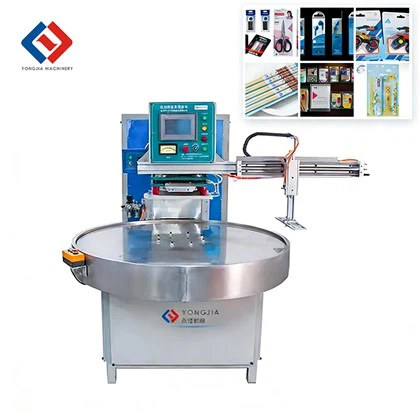
Let’s start with a quick breakdown of what large HF welding machines are and why power matters. Unlike small benchtop units used for hobby work or tiny parts, large HF welders are built for thick, dense materials or large-scale production runs—think inflatable boat hulls, automotive interior panels, vinyl signage, or heavy-duty tarps. They use high-frequency electromagnetic fields to create molecular bonds between thermoplastic materials, and power directly translates to their ability to heat those materials evenly and create strong, consistent welds.
So what’s the actual power range for a large HF welding machine? It’s not a one-size-fits-all number, and that’s where a lot of buyers get tripped up. Most commercial large HF welders fall between 5 kilowatts (kW) and 100 kW, but that range splits into distinct groups based on the machine’s design and intended use. Let’s break that down.
First, the lower end of the range: 5 kW to 15 kW. These are still technically “large” compared to hobby or small-shop machines, but they’re oriented toward medium-duty, smaller-scale industrial work. You’ll see these used for things like small vinyl decals, thin-gauge PVC blister packs, small inflatable patches, or fabricated automotive components like seatbelt pads or door seals. A 5 kW machine can handle material thickness up to around 3mm, but it will struggle with anything thicker than that, or large panels where the heat needs to penetrate evenly across the entire work area. The key here is that these are more portable, often tabletop or lightly mounted on frames, so their power is limited by the need for easier setup and lower operational costs for small to mid-sized production runs.
Next, the middle of the range: 20 kW to 50 kW. This is the sweet spot for most industrial fabrication work. These machines are heavy-duty, floor-standing units with larger work areas—think 1,200mm x 1,800mm or more—to accommodate big parts. They can handle material thickness from 3mm up to 12mm, making them versatile for jobs like large inflatable structures (boats, air domes, event tents), heavy vinyl signage, PVC coated fabric, and even some thermoplastic composites used in industrial packaging. A 30 kW machine, for example, can heat a 10mm thick PVC sheet across its entire surface without hot spots, which is critical for preventing weak welds that fail under pressure. I’ve seen many fabricators start out with a 20 kW machine and move up to 40 kW as their production grows, because the extra power lets them work faster and take on bigger, higher-margin jobs.
Then there’s the upper end of the range: 60 kW to 100 kW. These are the heavyweights, built for specialized, extreme-duty applications. You’ll find these in industries like aerospace (for sealing aircraft interior components), marine manufacturing (for large ship fenders or offshore buoy parts), and heavy industrial construction (for geomembranes used in landfills or mining). These machines can handle material thickness up to 25mm, and their power is designed to create welds that are as strong as the material itself—important for parts that need to withstand extreme conditions, like constant water pressure or heavy abrasion. A 100 kW machine isn’t for every shop; it’s a major investment, but it lets contractors take on large infrastructure projects that smaller machines can’t handle at all.
Now, here’s a common misconception: more power isn’t always better. I had a customer a few years back who bought a 100 kW machine because he thought it would let him do every job, but he soon realized that his small, 3mm thick vinyl decal jobs were overheating too fast with that much power, ruining material and wasting money on electricity. The same goes for a 5 kW machine used for a 10mm thick geomembrane; it would take forever to heat, leading to inconsistent welds and lost production time.
So how do you figure out which power range is right for your work? Let me walk you through the factors I go over with every customer when we’re matching them to a machine.
First, material thickness and type. Thermoplastics come in all sorts: PVC, PU, PETG, and coated fabrics. Each has a dielectric strength, which determines how well it absorbs HF energy. For example, PVC is a good absorber, so a lower power machine can work well on it, but PU is less efficient, so you’ll need more power to get the same heat. If you’re working with 8mm thick coated nylon, you’re going to need at least a 25 kW machine; if it’s thin 1mm PVC, a 5 kW is enough.
Second, size of the workpieces. If you’re welding a 2m wide inflatable boat hull, you need power that can spread evenly across that entire area. A small 5 kW machine might work for a 50cm wide patch, but the larger area of the hull will need more power to avoid cold spots in the center.
Third, production speed. If you’re running a high-volume job—say, 1,000 vinyl bags a day—more power lets you cycle through workpieces faster, without waiting for the material to heat. Lower power machines will get the job done, but you’ll end up with slower turnaround, which can hurt your bottom line.
Fourth, long-term use. If you plan to expand your business in the next two to three years, it’s often better to go slightly higher in power than you think you need, rather than outgrowing the machine quickly. We have customers who started with a 20 kW machine and now use it for small jobs, while their newer, larger production lines run on 50 kW machines. That flexibility is key for growing operations.
Now, let’s talk about what goes into making a large HF welding machine’s power consistent. It’s not just about the kW rating; the quality of the oscillator, the power supply, and the electrode design play a big role. A cheap 30 kW machine might have a label that says 30 kW, but in practice, it might only deliver 22 kW of usable power, leading to weak welds. That’s why as a supplier, I always test every machine’s output before it leaves our facility, so you know exactly what you’re getting. We also offer adjustable power settings, so you can dial it back for thin materials and turn it up for thick ones, which gives you versatility without overspending.
I also want to mention power considerations for your facility. Large HF welding machines draw a lot of electricity, so you need to make sure your shop’s power supply can handle it. A 5 kW machine only needs a standard 220V outlet, but a 50 kW machine will require a three-phase 480V connection, and sometimes even dedicated wiring with a specific amp rating. I always ask customers to send their facility’s power specs before recommending a machine, because we don’t want someone to buy a machine that they can’t install.
Over the years, I’ve seen how the right power range can transform a shop. A small custom fabricator I worked with a few years ago was using a 10 kW machine and struggling to win bids for large event tents. We helped them upgrade to a 30 kW machine, and suddenly they could handle tents up to 10m wide, which doubled their revenue. On the flip side, a large construction company once bought a 100 kW machine for their small geomembrane patch work, and they spent extra on electricity and maintenance that they didn’t need. That’s why taking the time to assess your specific needs is so important.
If you’re not sure what power range is right for your work, don’t hesitate to reach out. We’ve helped hundreds of customers narrow down their options, based on their materials, work sizes, and production goals. Whether you’re a small shop just starting out, a mid-sized fabricator looking to expand, or a large construction company needing heavy-duty equipment, we can walk you through the different power ranges and features to find the machine that fits your needs. We offer flexible financing options, installation support, and ongoing maintenance to make sure your machine runs smoothly for years to come.
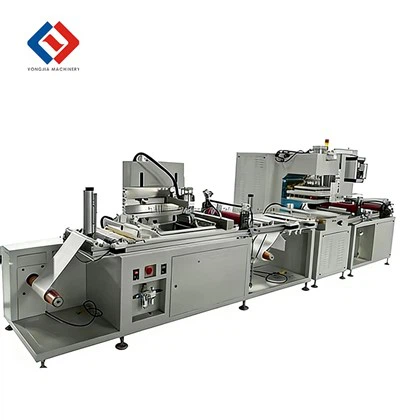
Take the guesswork out of choosing the right large HF welding machine. Contact our team today to discuss your requirements and find the perfect power range for your operations.
Head Foot Operated HF Welding Machine References:
- International Organization for Standardization. (2018). Welding of Thermoplastic Materials – High Frequency Welding – Safety and Performance Requirements. ISO 11612:2018.
- American Welding Society. (2021). Industrial High Frequency Welding Equipment: Selection, Operation, and Maintenance. AWS D1.17:2021.
- European Committee for Standardization. (2020). Safety of Machinery – High Frequency Welding Machines – Part 1: Design and Manufacturing Requirements. EN 1010-1:2020.
- Thermoplastic Fabricators Association. (2019). Guide to High Frequency Welding Power Requirements for Common Thermoplastic Materials. TFA Technical Bulletin No. 4.
Dongguan Yongjia Machinery Equipment Co., Ltd.
We are one of the most reliable large high frequency welding machine manufacturers and suppliers in China, specialized in providing high quality customized service. Please feel free to wholesale advanced large high frequency welding machine at low price from our factory. For quotation, contact us now.
Address: No. 240, Chashan South Road, Chashan Town, Dongguan City, Guangdong Province, China
E-mail: info@yjwelding.com
WebSite: https://www.yjhighfrequencymachine.com/
