Hey everyone, let’s cut to the chase if you’re out there shopping around for a bag making machine and wondering, “Can this thing actually crank out plastic bags in different colors?” Spoiler: Yeah, it can—way easier than you might’ve thought. As a supplier of bag making machines, I get so many questions about this one, and I love breaking it down straight, no jargon, no fancy corporate fluff. Bag Making Machine
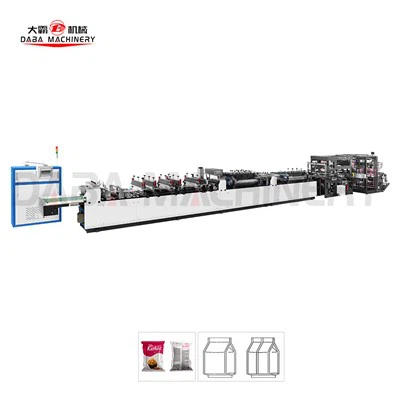
First off, let’s clear up the basics. You know those colorful grocery bags at the store, or the branded tote-style plastic bags for shops, even the subtle pastel produce bags? They don’t get that way by hand. A good modern bag making machine is built to handle color changes without forcing you to stop the whole line or reconfigure half the parts. Let’s break this down like I’m explaining it to a friend who’s new to the industry.
Old-school bag machines—we’re talking ones from 10+ years ago—could only do one color at a time. If you needed red one day and blue the next, you had to swap out the entire printing unit, which took hours, messed with your production timeline, and cost you extra in labor. That’s a headache no small business owner wants. But today’s models? They’ve got modular color systems. Modular, for the uninitiated, means each color station is a separate, easy-to-swap module. Pop off the red module, snap on the blue one, and you’re back to running in like 15 minutes. No shutdowns that kill your weekly output, no messing with complicated gears or rollers.
Wait, but does that just apply to the printing part? Because that’s what a lot of people think. Oh no, we’re talking both the base plastic film and the printed color. Let’s start with the base. If you want, say, a bright yellow bag, you can feed pre-colored yellow film into the machine right from the start. Some machines even let you mix two different color pellets into the extruder (that’s the part that melts the plastic into film) to make custom shades—think a soft mint green or a deep navy, not just basic red/blue/yellow. The extruder’s got tiny mixers that blend the pellets evenly, so you don’t get splotchy, patchy bags. That’s a big deal because customers hate a bag that’s half yellow and half white.
Then there’s the printing part, which is where most of the color magic happens for branded designs. Bag making machines can have anywhere from 1 to 8 printing stations. Each station holds a color, so if you need a logo with red text, blue outline, and black details, you just set each station to its color, line them up, and the machine prints all three in one pass. And here’s the kicker: if you want to change the printed design or swap a color (like switching from a blue logo to a green one for a sale), you don’t have to replace the whole print cylinder. Most modern machines use quick-change print sleeves—sleeves that slip over the cylinder, no tools needed. Swap the blue sleeve for green, adjust the alignment, and you’re done. Way faster than the old days where you had to take the whole cylinder off and realign it, which could take an hour or more.
I should mention, though, that there are limits to what a machine can do. If you’re running super thin film (like the produce bags that are barely thicker than a sheet of paper), you might not want too many colors—thinner film doesn’t hold print as well, so 2 or 3 max is better. For thicker bags, like the heavy-duty ones retailers use for shopping, you can go up to 5 or 6 colors no problem. Also, if you’re making completely opaque bags vs. translucent ones, that affects color too. Translucent film lets the plastic’s base color show through, so if you want a bright translucent orange, you can use orange tinted pellets, while opaque bags can have bolder, more saturated printed colors.
From my side, working with clients, this flexibility is a game-changer for small to medium businesses. A lot of shop owners or distributors don’t just make one type of bag all year. They might do custom branded bags for a client, then switch to holiday-themed red and green bags for November and December, then go back to plain white for bulk orders. If their machine can handle quick color changes, they don’t have to rent extra space for old parts, or hire a tech every time they want to switch. That saves them money, plain and simple.
Wait, have you ever seen a bag that has two different colors on each side? Like, one side is white, the other is black? A lot of people ask about that too. Yep, you can do that with a multi-layer extruder system. The machine feeds two separate film layers, each a different color, then laminates them together before cutting and sealing into bags. No extra step, no separate process—one machine does it all. That’s why I always tell people not to underestimate what today’s bag making machines can do; they’re built to adapt to whatever your business needs, not just a one-size-fits-all model.
Now, let’s talk about a few common mistakes people make when they’re looking into color capability. First, don’t confuse “can it do multiple colors” with “can it do high-quality colors.” A cheap, outdated machine might swap colors fast, but the print might smudge, or the film might tear when you switch. When you’re vetting machines, ask for a test run with your own color preferences. A good supplier (that’s me, by the way) will let you run a small batch on the machine before you buy, so you can see how the colors look, how easy the changeover is, no surprises.
Another thing: some people think they need a separate machine for colored vs. clear bags. No way. Most modern machines can switch between clear base film, tinted base film, and pre-colored printed bags without any permanent changes. The only time you might need an upgrade is if you’re doing super specialized stuff, like UV-resistant colored bags for outdoor use, which needs a different additive in the pellets—but that’s not a machine limitation, that’s just material stuff.
I get it, if you’re new to the bag industry, all this tech stuff can sound overwhelming. But the short answer is: yes, your bag making machine can absolutely make plastic bags in different colors—even custom colors, even multi-color designs. The days of being stuck with one color for months are long gone, and that’s thanks to modular, quick-change tech that’s standard on most modern machines now.

If you’re in the market for a bag making machine, or you have questions about how a specific model handles color changes, don’t overcomplicate it. Hit me up for a chat about what your production needs are—whether you’re making 10,000 bags a month or 100,000, we can work out a setup that lets you make all the colors your business needs, no hassle. No sales pitches, just straight talk about what works for your bottom line.
Vertical Slitting Machine References:
- Modern Plastic Bag Making Machine Technology, Industrial Machinery Digest, 2023
- Quick-Change Systems for Flexible Packaging Equipment, Packaging World, 2022
- Extrusion and Color Blending for Plastic Film, Plastics Technology, 2021
Wenzhou Daba Machinery Co., Ltd.
With abundant experience, we are one of the most professional bag making machine manufacturers and suppliers in China. We warmly welcome you to wholesale advanced bag making machine at competitive price from our factory. If you have any enquiry about cooperation, please feel free to email us.
Address: Qianbu Industrial Zone, Xincheng Street, Ruian City, Wenzhou, China.
E-mail: info1@dabamachinery.com
WebSite: https://www.dabaflexpack.com/
