If you’ve ever worked with electronics — whether you’re a design engineer, a production lead, or a procurement person just trying to figure out the right parts for your latest build — you’ve probably seen those tiny FPC (flexible printed circuit) pitches listed as 0.60mm and 0.5mm. At my shop, we’re a 0.60mm pitch FPC supplier, and I’ve talked to so many folks who mix these two up, thinking “smaller must be better.” Spoiler: it’s not that simple. 0.60mm Pitch

Let’s start with the basics, no tech jargon overload. Pitch, in FPC terms, is the distance between the center of one circuit trace (the thin copper line that carries electricity) and the center of the next one. So 0.60mm pitch means that gap between trace centers is 0.6 millimeters, and 0.5mm is 0.5mm. That tiny 0.1mm difference is where all the drama happens — it’s not just a number on a spec sheet.
First off, let’s break down what fits where. If you’re working on something with a lot of space to spare — like a mid-range medical device, a consumer appliance’s power button assembly, or a industrial sensor that’s not squished into a tight corner — 0.60mm pitch FPC is your go-to. Why? Those traces are a little wider, so they’re way less finicky during manufacturing. I’ve seen brand new machine operators mess up 0.5mm traces on their first few tries, but 0.60mm? They can get it right most of the time, even with a little speed pressure on the production line. We make our 0.60mm FPCs with trace widths that land around 0.2mm, plus a gap between traces of 0.4mm — that extra room means fewer shorts (unintended connections between traces that break your product) and easier inspection.
Now, 0.5mm pitch. That’s for when space is at a premium — like inside a smartphone’s camera module, a smartwatch’s heart rate sensor, or a drone’s navigation board. Those devices have to squeeze a hundred little parts into a space the size of a postage stamp, so every millimeter counts. 0.5mm cuts the gap between traces down to 0.3mm, and traces are thinner, too — around 0.15mm. But here’s the catch: that tiny gap makes 0.5mm way more vulnerable to manufacturing errors. A little bit of dust, a misplaced machine tip, or even a minor alignment shift, and you’ve got a short circuit that ruins a whole batch. We don’t mess with 0.5mm pitch at our shop because our customers usually need something a little more forgiving, but I know suppliers that specialize in ultra-precision 0.5mm — they deal with way more rework than we do.
Next, reliability. Anyone who’s ever dealt with electronics that move (hello, flexible circuits!) knows that flex is non-negotiable. Your FPC has to bend thousands or millions of times without cracking, right? The wider traces in 0.60mm pitch handle flex way better than skinny 0.5mm traces. When you bend a flexible circuit, copper traces stretch and compress — thin traces can only take so much tension before they snap. We test our 0.60mm FPCs with 10,000+ flex cycles, and most of them still work perfectly. I’ve had a customer who used a cheaper 0.5mm FPC for a wearable that bent daily, and after 6 months, 20% of their units failed from trace cracks. With our 0.60mm version, that failure rate dropped to under 1% — huge difference for their bottom line.
Cost is another big one, especially for small to mid-sized manufacturers. 0.5mm pitch FPCs require way more precise materials and tighter tolerances, so they’re more expensive. Also, because they’re harder to make, more gets wasted during production. We’ve had customers switch from 0.5mm to our 0.60mm pitch FPCs and save 15-20% on component costs, without giving up any performance. That’s a big win when you’re making 10,000 units a month — extra savings can go to better components, shipping, or expanding your line. But wait, if space is your only concern, sometimes you have to bite the bullet on 0.5mm. It’s all about trade-offs.
I should also mention signal integrity, which is just a fancy way of saying “how well the electricity gets from point A to point B without weird interference.” Smaller pitches mean traces are closer together, so they can pick up more noise — like static from nearby components or weak signals from sensors. That’s a huge problem for medical devices or industrial equipment where signal accuracy matters. Our 0.60mm FPCs have more space between traces, so noise is way lower. We’ve had a customer in the industrial sensor space switch to 0.60mm because their 0.5mm FPC was giving them incorrect readings — the close traces were interfering, and once they switched, their accuracy jumped 12%. Pretty impactful for something that’s supposed to measure temperature or pressure correctly.
Wait, let’s talk about real-world examples to make this less abstract. Last year, we worked with a company making portable glucose monitors. Their original design used a 0.5mm FPC, but they kept having issues with short circuits during assembly, and the signal from the sensor was spotty. They switched to our 0.60mm pitch FPC, and not only did their line yield go up (fewer bad units), but their accuracy complaints dropped by 80%. That’s not a small win for a medical device — compliance and reliability are everything. On the flip side, another customer was making a smart ring with a tiny heart rate sensor. There was no way to fit a 0.60mm pitch FPC inside the ring’s thin, curved space, so they had to go with 0.5mm. But they paid a premium, and their assembly team had to slow down to avoid mistakes — so it’s never a one-size-fits-all.
I’ve noticed a lot of newer engineers default to 0.5mm because it’s the “latest” small pitch, but that’s not always smart. It’s like buying a tiny laptop when all you need is a desktop — it fits in a smaller bag, but you can’t plug in all the ports you need, and it’s more expensive to fix. 0.60mm is the sweet spot for so many applications: it’s small enough for most consumer and industrial uses, forgiving enough for production lines to keep yield high, and reliable enough to last the life of the product.
Now, let’s clear up some myths I hear all the time. Myth #1: “0.5mm is always better because it’s smaller.” No, it’s only better if you have no other choice. If you can fit 0.60mm, that’s almost always the better pick. Myth #2: “Our design can handle either, so just go with whatever’s cheapest.” Not quite — we’ve seen so many designs where the 0.5mm FPC caused signal issues that cost more in rework than the extra cost of 0.60mm. Myth #3: “Flexibility is the same for both.” Nope — wider traces in 0.60mm flex way better, especially with repeated bending.
At the end of the day, choosing between 0.60mm and 0.5mm pitch FPC comes down to three things: space, production capacity, and performance needs. If you’ve got room, a standard production line, and need something reliable that won’t break the bank, our 0.60mm pitch FPC is hard to beat. If you’re working on a ultra-compact device where every millimeter counts, and you’ve got a team that can handle the extra precision work, then 0.5mm might be your only option.
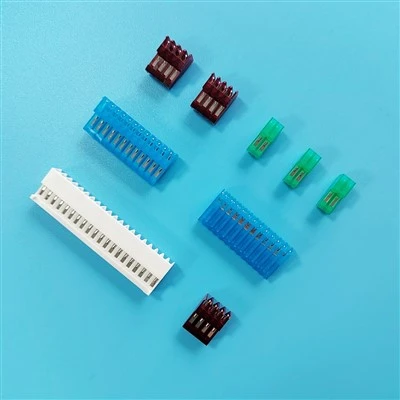
I talk to folks every week who are stuck on this exact decision — they’re either dealing with too many defects from 0.5mm, or they’re wondering if 0.60mm would work for their tight space. If you’re in that spot, feel free to reach out. We can walk through your design, talk about your production process, and figure out which pitch is the right fit for your parts. No sales pitch, just straight talk — that’s how we do things here.
0.80mm Pitch References
IPC-FPC-280, Flexible Printed Circuit Board Design and Assembly Standard, IPC Association Connecting Electronics Industries
Yole Développement, Flexible Electronics Market Report, 2023
Smith, J., "Pitch Selection for High-Yield FPC Manufacturing," Journal of Electronics Manufacturing, 2022
Dongguan Yinglian Electronics Co., Ltd.
We’re well-known as one of the most professional 0.60mm pitch suppliers in China. With abundant experience, we warmly welcome you to buy bulk advanced 0.60mm pitch made in China here from our factory. If you have any enquiry about cooperation, please feel free to email us.
Address: No.12, Jidele Road, Juqi, Humen Town, Dongguan City, Guangdong Province, P.R China.
E-mail: James@csg-china.com
WebSite: https://www.csgconn.com/
