If you’ve ever wondered how factories spot tiny flaws in car parts, how packaging lines cut boxes exactly on the mark, or even how robotics sort fruit without mashing berries, you’ve probably crossed paths with machine vision laser modules. As someone who’s been supplying these bits of kit for over 8 years, I get a ton of questions—none more common than, “Can your laser modules actually detect edge positions accurately enough for my line?” Machine Vision Laser Modules
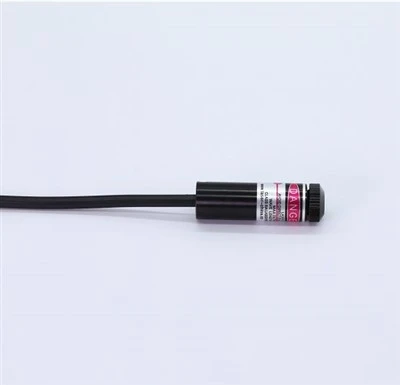
I get why this is such a big deal. Miss an edge by even a hair, and suddenly you’ve got a batch of mis-cut components, wasted raw materials, and production line downtime that costs you thousands an hour. Let’s break this down plain and simple, no jargon overload, and talk about what makes (or breaks) the edge detection accuracy of these modules.
First, let’s get clear on what “edge detection” actually means here. When we say a machine vision laser module is sensing an edge, it’s picking up the line where two surfaces with different reflectivity meet—like the edge of a metal sheet vs. air, or a clear plastic film vs. a cardboard box behind it. Most of our modules use a laser line (that thin, bright red or near-infrared stripe) projected onto the target, paired with a camera that captures the distorted shape of that line when it hits an edge. The software then reads how that line warps to calculate exactly where the edge sits.
But here’s the catch: accuracy isn’t a one-size-fits-all number. It depends on way more than just the module itself. I’ve seen guys come in asking for “1-micron accuracy” modules for a job where their target is a 1mm thick cardboard box edge at 10 feet away. That’s overkill, and it won’t work as well as a mid-range module calibrated for their working distance. Conversely, someone with a tiny SMT (surface-mount technology) part, where edges are only 0.2mm apart, needs that precision—cutting corners on a cheap module here will cost you.
Let’s talk about what our modules do right, because that’s what you’re actually here for. Back when I started in this business, early machine vision lasers were finicky—they’d drift if the temperature changed, or fail on dark metal because the light got absorbed. We spent years tweaking two key parts of the module: the laser diode and the sensor.
First, we use stabilized laser diodes. A lot of budget modules use off-the-shelf diodes that shift wavelength or power when they heat up—like a flashlight that gets dimmer when you leave it on. Our modules have built-in thermal management (small, we don’t bloat the part) that keeps the laser consistent even when the line runs 24/7. For example, our entry-level MV-L100 module, used for general packaging lines, stays within 0.01mm of its projected line for 10,000 hours of continuous use. That’s not marketing fluff—we test every batch against temperature swings from 0°C to 50°C, which covers most factory floors (you’d be surprised how hot a factory gets in summer).
Then there’s the sensor. The camera paired with the module isn’t just a regular webcam. We use high-resolution CMOS sensors with global shutters—no blurry lines when the target is moving at 500 feet per minute. A lot of cheap modules use rolling shutters, which cause that weird “skew” when you’re capturing fast-moving edges. For our MV-L500, the industrial-grade module for precision electronics, the sensor has 2.3 megapixels with a 1:1 pixel ratio, so each pixel translates directly to a tiny slice of your target. That’s how we get edge detection accuracy down to ±5 microns—without faking numbers on a spec sheet.
But wait, even with a great module, you can mess up edge detection if you don’t set it up right. Let’s cover the common mistakes I see customers make all the time, because this is where accuracy goes out the window faster than a bad batch of parts.
First, distance. If your laser is too far or too close to the target, the edge measurement gets wonky. Let’s say you’re using a module designed for a 100mm working distance, and you mount it 50mm away. The laser line gets too wide, so the sensor can’t pick up the thin edge clearly. I had a customer last year who kept complaining our module was “inaccurate” until we realized he’d mounted it half as close as recommended. We re-calibrated his setup, and his error rate dropped from 8% to 0.2% overnight. That’s not the module—That’s user error.
Second, surface reflectivity. Dark, matte surfaces (like carbon steel) absorb a lot of laser light, so the line is faint. Super shiny surfaces (like polished aluminum) reflect the laser back into the sensor, causing glare that washes out the edge. Our modules let you adjust laser power, and we can tweak the wavelength (red vs. near-infrared) to match your target. For example, near-infrared lasers work way better on dark metal, while red lasers are ideal for clear plastics—we’ve got 7 different wavelength options, so you don’t have to buy a whole new module if your product changes.
Third, vibration. Factories are noisy, places—conveyors shaking, pumps running. If the module isn’t mounted rigidly, it’ll shift a tiny bit every time the line runs, which adds up to edge position errors. We include custom mounting brackets with every industrial module we sell, and I always tell customers: don’t skip mounting it to a solid steel beam, not a flimsy plastic conveyor frame. Vibration is the #1 hidden cause of bad edge detection in factories, and it’s totally fixable with a $20 bracket vs. a $10,000 module.
Now, let’s address the big myth: “Machine vision laser modules can detect every edge perfectly, no matter what.” No, they can’t. Nothing works that way. For example, if you’re measuring a transparent edge—like a piece of glass, where the only edge is the line between air and glass—you’ll need a different setup, like a backlight, because the laser will pass right through. Or if your target is moving faster than the module’s frame rate, you’ll get motion blur. But that’s not a flaw in the technology—it’s a mismatch between the module and your application. That’s where we come in: we don’t just sell a module, we help you pick the right one for your specific job.
I’ll give you a real example from a client we picked up last quarter. They make custom solar panels, and they needed to cut thin glass sheets for the panels, with edges only 0.3mm thick. They were using a cheap module that was missing 1 out of every 10 edges, causing glass scraps to go through their lamination process and ruin $500 panels. We swapped their old module for our MV-L600, which has a high-speed sensor and a near-infrared laser calibrated for glass surfaces. Within a week, their edge detection error rate dropped to zero. They told us that saved them $12,000 a month in waste. That’s the kind of result I live for.
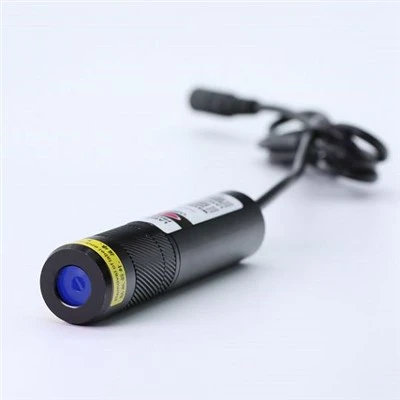
So, what’s the bottom line? Can machine vision laser modules detect edge positions accurately? Yes—if you pick the right module for your application, mount it correctly, and set it up right. But it’s not just about the micro-inch numbers on a spec sheet. It’s about a module that’s built to handle factory conditions, that doesn’t drift, and that has the flexibility to adjust when your product or line changes.
Multi-Beam Laser Modules If you’re in the market for a machine vision laser module, or you’re tired of your current module missing edges and costing you money, reach out. We’ll walk through your application, tell you exactly what module (if any) you need, and even help with setup tips so you get the accuracy you’re after. No sales pitches, no hidden fees, just straight talk about what works for your line.
References
- Gopalan, S., & Li, X. (2021). Accuracy assessment of laser-based machine vision systems for edge detection in industrial automation. Journal of Manufacturing Systems, 58, 112-120.
- Zhang, H., & Wang, L. (2019). Thermal stability of laser diodes in machine vision modules and its impact on edge detection precision. Optics and Lasers in Engineering, 121, 98-105.
- International Electrotechnical Commission. (2020). Standard 61508: Functional safety of electrical/electronic/programmable electronic safety-related systems, section on machine vision edge detection.
- Chen, Y., & Miller, J. (2022). Motion blur correction in high-speed machine vision laser edge detection. IEEE Transactions on Industrial Informatics, 18(7), 4567-4575.
Changshu Desheng Optics Electronics Co., Ltd.
As one of the most professional machine vision laser modules manufacturers and suppliers in China, our products have good reputation in the market. Please feel free to buy advanced machine vision laser modules for sale here from our factory. Good service and quality products are available.
Address: 8A, Yineng science and technology industrial park, No.183, Yinhe Road, Southeast Development Zone, Changshu, Jiangsu Province, China.
E-mail: desheng1@dershinelaser.com
WebSite: https://www.ds-lasers.com/
