When you walk through a plant that processes oil, gas, chemicals, or even shipbuilding yards, you’ll see heavy metal pipes connected at sharp angles or sudden changes in direction. Those connections don’t just happen—they rely on specialized components engineered for strength and durability. One of the most common and critical pieces in that network is the butt weld flange, a part many people in our industry take for granted until a piping system leak or pressure failure hits operations. As a flange supplier who’s spent decades working with fabricators, plant engineers, and maintenance crews, I’ve seen first-hand how misunderstanding what a butt weld flange is and how to use it can lead to costly downtime, safety risks, and even environmental incidents. That’s why I want to break this down clearly, from what makes a butt weld flange unique to why it matters for every industrial piping system. Flanges
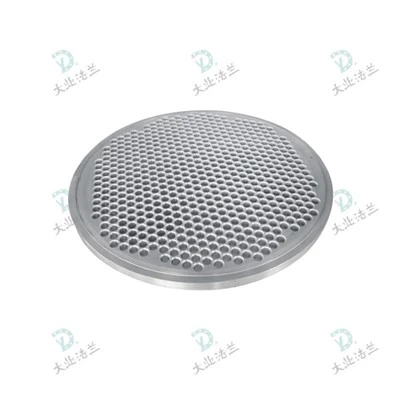
Let’s start with the basics: a flange is a mechanical component used to connect pipes, valves, pumps, and other equipment into a piping system. Most flanges come in standard shapes, sizes, and materials, and they’re designed to be removable so you can inspect, clean, or replace parts without cutting the entire system apart. But not all flanges are the same, and that’s where the butt weld flange stands out. Unlike slip-on flanges that slide over the end of a pipe and weld along the outside, or threaded flanges that screw onto pipe ends, a butt weld flange has a smooth, tapered hub that matches the beveled end of the pipe it connects to. That taper isn’t random—it’s engineered to create a gradual transition in diameter between the pipe and the flange, which reduces stress concentrations at the joint. Stress concentrations are where metal is most likely to crack, especially under high pressure, temperature, or cyclic load, so that taper is a key design feature that makes butt weld flanges stronger than many other types.
When you pair a butt weld flange with a pipe, the process is called a butt weld, and it’s different from other flange welding methods. For slip-on flanges, you weld two fillet welds: one on the inside of the pipe and one on the outside. That creates a weak point because the weld doesn’t penetrate the full thickness of the pipe wall, and any debris that gets trapped between the pipe and the flange can cause corrosion over time. With a butt weld flange, you first bevel the end of the pipe to match the flange’s hub bevel—usually a 30- or 37.5-degree angle, depending on standards like ASME B16.5 or ISO 7005-1. Then you fit the pipe’s end tight against the flange’s hub so the two metal surfaces meet along their entire circumference. You run a single full-penetration weld around the joint, which bonds the pipe and flange into one solid piece. That full penetration eliminates gaps, reduces stress, and creates a joint that’s as strong as the pipe itself, which is why butt weld flanges are the go-to for high-pressure, high-temperature, or extreme-service applications.
Let’s talk about when you’d choose a butt weld flange over other types. If you’re working on a low-pressure water line in a small factory, a slip-on flange might be fine—it’s cheaper, faster to install, and works for less demanding conditions. But if you’re handling natural gas at 1,500 psi in a refinery, or superheated steam at 500 degrees Fahrenheit in a power plant, you need the strength and reliability of a butt weld flange. Those environments put constant stress on piping systems: pressure fluctuations, thermal expansion and contraction, and even vibration from pumps can cause weaker joints to fail. I’ve seen a slip-on flange leak at a remote well site because the weld corroded after two years of exposure to sour gas, costing operators over $100,000 in lost production and emergency repairs. A butt weld flange would have held up far longer in that corrosive, high-pressure environment. Another use case is for large-diameter pipes—anything over 24 inches, usually. Threaded flanges aren’t practical for big pipes, and slip-on flanges can have issues with alignment in large joints. Butt weld flanges provide a secure, aligned connection that’s easy to fabricate even for the biggest piping runs.
Now, you might be wondering: what’s the difference between a butt weld flange and a lap joint flange? They look similar at first, but lap joint flanges have a loose collar that slips over the pipe, and the pipe end butts against the flange’s flat face. That’s useful if you need the flange to rotate for alignment during installation, which is helpful in tight spaces. But lap joint flanges create another joint (between the collar and the pipe) that can be a weak point. Butt weld flanges don’t have that loose collar—they’re one solid piece, so the only weld is the one between the pipe and the flange. That simplicity is another reason they’re preferred for critical applications.
Material choice is another big factor with butt weld flanges, and as a supplier, I can’t stress enough how important it is to match the flange material to your application. Most butt weld flanges are made from carbon steel for general industrial use—cheap, strong, and resistant to most atmospheric and mild corrosives. But if you’re dealing with acids, saltwater, or high-temperature chemicals, you’ll need alloy steels like stainless steel (304 or 316, for example), duplex steel for extra corrosion resistance, or even specialized materials like Hastelloy or Inconel for extreme environments. Each material has its own temperature and pressure rating, so it’s not just about picking a shiny stainless steel flange—you need to make sure it’s rated for your specific service. I’ve had customers come to me after buying cheap butt weld flanges from a supplier that used low-grade carbon steel for a chemical processing line; the flanges corroded in six months, and they had to shut down the entire line to replace them. That’s why working with a supplier that understands material specs is just as important as the flange itself.
Installation is where a lot of mistakes happen, too. A butt weld flange is only as good as the weld that connects it to the pipe. If the weld isn’t fully penetrated, if there are porosity gaps, or if it’s not ground smooth, it can fail under pressure. Many fabricators rush the welding process to save time, but that’s a false economy. I recommend that any butt weld flange joint get tested after installation—usually with a non-destructive test like hydrostatic testing, where you fill the pipe with water and pressurize it to 1.5 times the working pressure to check for leaks, or ultrasonic testing to look for internal flaws in the weld. I’ve seen a plant save $2 million in a single pressure vessel job by adding an ultrasonic test to every butt weld flange joint; they caught a hidden weld flaw before the system went online, avoiding a catastrophic failure.
Maintenance is another area where butt weld flanges shine, but they do require proper care. Even though the joint is strong, the flange faces can get damaged over time from improper handling, debris in the system, or repeated bolt tightening and loosening. The flange’s face is where the gasket sits, creating a seal between the two flanges. If the face has scratches, pitting, or warping, the gasket won’t seal properly, leading to leaks. That’s why it’s important to store butt weld flanges correctly—flat, in a dry area, and protected from dust and debris until installation. When you’re assembling the flange, use a gasket made for your specific pressure and temperature, and tighten the bolts in a crisscross pattern to distribute pressure evenly around the flange. If you tighten bolts in a circle, you’ll warp the flange face and create a leak path, even if the weld is perfect.
As a flange supplier, I talk to engineers and maintenance teams every day who are still mixing up butt weld flanges with other types, and that’s a conversation I’m happy to have. A lot of people see a flange and just see a metal disk, but each type is designed for a specific job. Butt weld flanges aren’t the cheapest, but they’re the most reliable for high-stakes applications where downtime or failure isn’t an option. They’re used in refineries, power plants, offshore drilling rigs, chemical processing facilities, and even in large-scale water treatment plants—anywhere that piping systems have to withstand harsh conditions.

If you’re working on a project where you need a flange that’s strong, durable, and built to last, don’t cut corners on your flange choice. A butt weld flange is an investment in the safety and efficiency of your entire piping system. Whether you’re planning a new installation, replacing worn parts, or just want to make sure you’re using the right component for your service, feel free to reach out to discuss your requirements. We work with every kind of industrial application, from small local operations to large international facilities, and we can help you choose the right butt weld flange (and related components) for your needs, with the right material, size, and rating. Let’s talk through your project, so you can make the best choice for your system and avoid the headaches that come with wrong parts or improper installation.
Pipe Fitting Elbow References
- ASME B16.5, Pipe Flanges and Flanged Fittings, American Society of Mechanical Engineers
- ISO 7005-1, Metallic flanges – Part 1: Steel flanges, International Organization for Standardization
- Welding Handbook, Volume 3: Pipe Welding, American Welding Society
Zhejiang Daye Flange Co., Ltd.
Zhejiang Daye Flange Co., Ltd. is one of the most experienced flanges manufacturers and suppliers in China. With a professional production team, we offer a wide range of flanges with superior quality and competitive price. Welcome to buy CE approved flanges in stock here and get pricelist from our factory. We also accept customized orders.
Address: Headquarter: 8, Gangqiang Road, Yongxing Street, Longwan District, Wenzhou City, Zhejiang Province, China
E-mail: sales@dayeflange.com
WebSite: https://www.daye-flange.com/
