Hey everyone! I’m [my brand], and I’ve been supplying emergency downlights for residential buildings for a minute now—so let’s cut to the chase: if you’re a homeowner, property manager, or even a new-build developer, you’ve probably wondered, “What the heck do I actually need when it comes to these lights?” No stuffy codes jargon, just real talk from someone who’s installed way too many of these to count, and knows exactly what works (and what doesn’t) for homes. Emergency Downlight

First off, let’s clear up a big myth: emergency downlights aren’t just for skyscrapers or fancy apartments. If you live in a house, townhouse, or even a condo building, there are rules (mostly local building codes, but some are universal) that spell out exactly where you have to have them—because when the power goes out, you don’t want to be fumbling around in the dark with a phone flashlight tripping over your kid’s toys.
Let’s Start With The Basics: What’s An Emergency Downlight, Anyway?
Before we dive into requirements, quick recap: an emergency downlight is a recessed ceiling light that has its own battery backup. It automatically switches on when the main power cuts out, usually within 3 seconds (that’s the legal standard in most places, FYI—no waiting around for 10 seconds of pitch black). Some are “maintained,” meaning they’re always on at low brightness, and kick up to full when power dies; others are “non-maintained,” meaning they only turn on when there’s a blackout. We’ll get to when to use which in a sec.
The Non-Negotiable Spots For Residential Emergency Downlights
Okay, let’s get to the good stuff: where you have to install these, per most building codes (I’m talking North America, UK, AU—these are the common ones that most suppliers and installers follow).
-
Staircases, Hallways, And Corridors
This is the big one. If your home has a staircase (inside or even the exterior ones leading to a front door), a hallway longer than, say, 2 meters, or any corridor that’s a main escape route, you need emergency downlights every 3 to 6 meters. Wait, 3 to 6? Yeah, because the light has to be bright enough so you don’t have dark spots along the escape route. I’ve seen so many cuts here—homeowners thinking “one light at the top of the stairs is enough,” but no, if you have a split-level home with a long upstairs hallway, you need a light every 4 meters max, or people will trip and hurt themselves when the power goes out. Also, these have to be visible from the bottom of stairs too—no placing a light halfway up if it’s hidden by a landing. -
Exit Paths Leading To The Outside
This includes the path from your main living areas to any exterior door that’s a primary exit (like the front door, back door, or the door leading to a garage that’s connected to the house). If you have a garage attached, the path from the house interior to the garage door also counts—so don’t skip that. Codes usually say you need at least one emergency light within 3 meters of each exterior exit door, and the path between them has to be lit the whole way. Last year, I did a job for a homeowner who had a back door leading to a patio, and they had no emergency light there—when a storm knocked the power out, their kid had to walk through a overgrown patio to get to the mailbox (weird, but true) and tripped over a garden hose. Fix that with a downlight in the patio’s overhang or near the door—simple. -
High-Risk Rooms (Basements, Attics, Laundry Rooms)
Wait, basements aren’t just for storage—if you have a basement with a staircase that’s an escape route, or a laundry room that’s also a common area, you need emergency downlights here too. Same with attics if you use them as a living space (not just a storage crawl space). Another spot: any room with equipment that’s critical during an outage—like a furnace, water heater, or sump pump (if you live in a flood-prone area). If the power goes out, you might need to access that sump pump fast, so a downlight near it is a no-brainer. I’ve had customers in hurricane zones tell me this is a lifesaver—no more groping for the fuse box in the dark when the generator kicks in. -
Multi-Unit Residential Buildings (Condos, Townhouses)
If you’re managing a building with 2 or more units, the rules are stricter. You need emergency downlights in every common area: lobby, elevator lobbies, hallways between units, stairwells, and even the parking garage. Also, some codes require that each unit has at least one emergency light in its main hallway or near the front door—so if you’re a property manager, don’t wait for an inspector to show up; get these installed before you get a fine. Last quarter, I worked with a condo board that got a $5,000 fine because they skipped emergency downlights in the parking garage—stupid mistake, don’t let that be you.
Now, Maintained vs. Non-Maintained: Which Do You Need Where?
Okay, this is where a lot of people mess up. Let’s break it down in plain terms:
- Non-maintained downlights: These are the ones that only turn on when the main power fails. They’re cheaper, and perfect for spots that are only used for escape routes (hallways, stairs, exit paths). Why? Because if they’re always on, your battery will die faster—so non-maintained is more efficient for escape-only spots.
- Maintained downlights: These are always on at 10-20% brightness, so you can see them even when power is normal, and they jump to full brightness during an outage. You might want these in spots where you use lights regularly but need backup—like a kitchen, bathroom, or living room? Wait, no—wait, most codes don’t require them in living areas, but some homeowners like them for peace of mind. But let’s be real: codes don’t mandate these in private living spaces, so don’t waste money on maintained lights there unless you want to. The required spots are almost all non-maintained.
Also, battery life: every emergency downlight has to have a battery that lasts at least 90 minutes. That’s the legal minimum—so avoid cheap no-name brands that have batteries that die after 30 minutes. I’ve had customers come back to me because they bought a random downlight on Amazon that only lasted 20 minutes during a test—total waste. Stick to brands that list a 90-minute runtime, that’s non-negotiable.
Common Mistakes Homeowners & Property Managers Make
Let’s call out the stuff that gets people in trouble:
- Not testing them regularly: Codes require you to test emergency downlights every month (a 30-second test) and a full 90-minute test every year. A lot of people forget this, but if your light doesn’t work when the power goes out, it’s useless. We sell test kits too—super easy, just press a button on the downlight and it triggers the test. No need to climb a ladder every time.
- Installing them in dark corners only: If a hallway is 5 meters long, putting one at the end isn’t enough. You need them spaced so there’s no area more than 2 meters away from a light—so 2.5 meters apart max. That way, no shadows blocking escape.
- Ignoring exterior spots: A lot of people focus only on inside the house, but exterior exit paths (like patios, walkways to the garage) are just as important. If your power goes out and your only exit is the back door, you need to see the step down to the patio—no one wants to break an ankle because of a missing light.
- Using regular downlights as emergency ones: Wait, you can’t just swap in a regular recessed light and call it emergency—those don’t have battery backups. They have to be listed as emergency downlights, meaning they’ve passed fire and safety tests. That’s why buying from a reputable supplier like me matters—we only stock UL-listed or CE-listed lights, so you know they meet codes.
My Pro Tips For Residential Installs
Okay, since I’m in the business, here’s what I tell my customers to save money and time:
- Mix and match: Use non-maintained lights in required escape spots, and if you want extra lighting in your living room, get a small emergency downlight that’s maintained—no need to do the whole house.
- LED is the way to go: LED emergency downlights use way less energy, last longer, and are brighter than old incandescent ones. Plus, they don’t get hot, which is safer for recessed ceiling spots.
- If you’re not sure, check your local code: Different areas have different rules—some require more lights, some different spacing. A quick call to your local building department will take 5 minutes, and save you from mistakes. Or, hit me up—we can help you figure out what you need for your specific home.
Let’s Wrap This Up
At the end of the day, emergency downlights aren’t just a “nice to have”—they’re a legal requirement in most places, and a safety must-have for anyone who values not tripping in the dark during a power outage. The key is knowing where to put them, which type to use, and making sure they work when you need them.
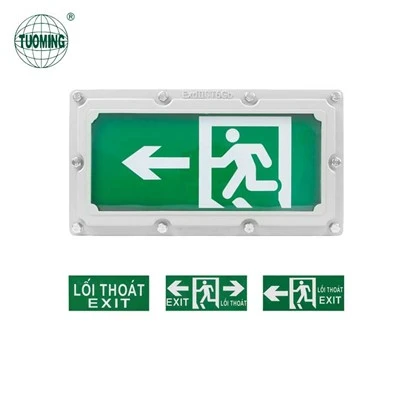
If you’re a homeowner, property manager, or developer looking to source reliable, code-compliant emergency downlights for your residential project—we’ve got you covered. No sketchy products, no overpriced junk, just lights that meet safety standards and work when the power cuts out. Hit us up to chat about your needs, get a quote, or ask any questions you have—we’re here to help.
References
Emergency Bulkheads National Fire Protection Association. (2022). NFPA 101: Life Safety Code. International Code Council. (2021). International Residential Code (IRC) for Emergency Lighting. Australian Building Codes Board. (2020). Volume One: Building Code of Australia (BCA) – Part J: Services and Equipment. Electrical Safety Authority. (2021). Emergency Lighting Requirements for Residential Buildings.
Zhongshan Tuoming Lighting Technology Co., Ltd.
As one of the leading emergency downlight manufacturers and suppliers in China, we warmly welcome you to buy advanced emergency downlight in stock here from our factory. All customized products are with high quality and low price.
Address: No.1, 10th Floor, No.17, Tongfu South Road, Guzhen Town, Zhongshan City, Guangdong Province
E-mail: 1989355847@qq.com
WebSite: https://www.tuominglight.com/
