If you’ve ever stepped into a construction site, a cabinet shop, or even a DIY woodworking project, you’ve probably encountered commercial plywood. But if you’ve ever stopped to ask, “what grade is commercial plywood?” you’re not alone. As someone who’s spent the last 12 years working with and supplying this material—first on job sites, then as a supplier—I’ve fielded that question from contractors, designers, and DIYers hundreds of times. For a long time, I assumed most people knew the grade labels, but over the years, I’ve learned that “commercial plywood” isn’t a one-size-fits-all term. It’s a category that covers a range of grades, each with specific uses, qualities, and value points. Let’s break this down in plain terms, no fancy engineering jargon, just the real-world stuff I’ve picked out delivering plywood and helping customers pick the right product. Commercial Plywood
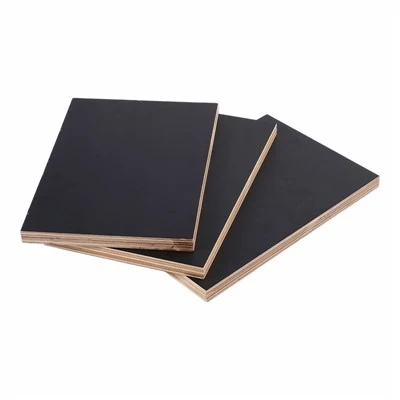
First, I need to clarify something right off the bat: when we talk about “commercial plywood,” we’re not talking about a single grade. It’s a broad term that refers to plywood designed for applications where appearance isn’t the top priority, but structural integrity, durability, and cost-effectiveness are. That contrasts with decorative plywood, which is finished with veneer for furniture, interior trim, or visible wall panels. Commercial plywood is built to perform, so its grades are rooted in the American Plywood Association (APA) standards—this is the rulebook we all use in the U.S., and I swear by it. I remember my old foreman, Joe, drilling this into me when I was a rookie: “If you ignore APA grades, you’re either wasting money or cutting corners that’ll come back to bite you on a job.” That’s stuck with me, so every time I talk grades, I reference those standards.
The core of plywood grading starts with the veneer layers, called plies. Each ply has a grade, from A (the highest quality, smooth, knot-free) down to D (a lower grade, with small knots and repairs). Commercial plywood doesn’t use A or B grade veneers on the face, though—those are for decorative plywood. Instead, it usually uses C and D grade faces, with interior or structural core plies that are graded for strength. The key here is that commercial plywood is divided into two main subcategories that dictate its grade: exterior and interior. That’s a huge distinction most people miss, and it’s where a lot of mistakes happen.
Let’s start with interior commercial plywood, because that’s what most of our volume suppliers is. Interior plywood is designed for dry, indoor spaces—walls, subfloors in homes with finished basements, interior framing, shed walls. The grade for interior commercial plywood is typically C-D. Here’s what that means: the face ply is C grade, with small knots (up to 1 inch in diameter) and tight, clean repairs called patches. The back ply is D grade, which can have larger knots (up to 2.5 inches) and more patches, but no open holes. The core is usually made of softwood plies, like pine or fir, bonded with urea-formaldehyde adhesive that’s water-resistant enough for dry spaces but not for damp areas. I’ve seen customers try to use C-D plywood for a bathroom subfloor and get upset when it warped after a leak—they forgot it’s not meant for moisture. That’s why we always make sure to ask customers if their project is in a dry or damp space before recommending anything.
Then there’s exterior commercial plywood, the workhorse for construction sites: roof sheathing, subfloors on ground-level decks, exterior walls, fence panels. Its grade is C-C or CDX, depending on the adhesive. Wait, CDX is a common term that confuses a lot of people—let me explain that. The “CD” stands for the face and back ply grades: C face, D back, same as interior, but the “X” stands for exterior adhesive, which is water-resistant and can hold up to rain, humidity, and temperature changes. It’s not marine-grade plywood—marine-grade is a whole higher level, with A or B faces and waterproof adhesive for boats or permanent docks—but CDX is the standard go-to for most commercial and residential exterior construction. I’ve delivered CDX to job sites in the middle of rainstorms and watched crews unload it, no problem, because that’s what it’s built for. It’s also cheaper than decorative plywood, which is why it’s such a staple for commercial projects that need to stay on budget.
But here’s the thing: not all C grade faces are created equal. Some manufacturers will cut corners on the plies—using thinner veneers, or more knots than allowed, or even core plies that have voids. That’s why as a supplier, we only work with mills that meet APA’s Product Standard PS 1-09. I’ve had a few bad experiences with uncertified plywood a few years back—we sold a load to a contractor for a small strip mall, and the sheathing started sagging a month after installation because the core plies were soft and had gaps. We took that load back, apologized, and since then, we only stock APA-rated commercial plywood. That’s the reason I emphasize this to customers: grading isn’t just a label, it’s a promise of quality.
Now, let’s get into the common misconceptions about commercial plywood grade. A lot of people think “commercial” means low-grade or cheap, but that’s not true. Commercial plywood is graded for performance, not looks, so it’s often more durable than decorative plywood even if it has a rougher surface. For example, a cabinet maker might use A-A decorative plywood for the visible parts of a kitchen, but use commercial C-D plywood for the interior of the cabinet frames, because it’s strong enough and you’ll never see it. Another mistake: people think grade D plywood is useless. D grade is perfect for the interior core of commercial plywood, where strength is more important than appearance. It has small, solid knots and patches, so it’s structurally sound as long as the adhesive is good. I’ve used D grade core plies in hundreds of projects, and they never failed me.
What about other grades, like C+ or D+? Those are variations, but they’re not official APA grades, so I always tell customers to stick to the standard C, D, and CDX labels. Some smaller mills will use their own grading, but it’s not consistent, which leads to problems. When a customer asks me what grade is right for their project, I walk them through the use case step by step. If they’re building a shed in their backyard, CDX exterior grade is perfect, no need to pay for a higher grade. If they’re framing interior walls in a home, C-D interior is the way to go, and it will save them a few hundred dollars compared to decorative plywood. If they’re building a deck that’s going to get wet regularly, they might want to step up to a higher exterior grade, like C-C exterior, which has a slightly better face ply that’s more resistant to splitting when nailed.
I also get a lot of questions about structural ratings. Grades aren’t just about the face and back—they also include a span rating, like 24/16 or 32/16, which tells you how far apart the studs or joists need to be for the plywood to support weight. That’s part of the grading too, and it’s listed right on the edge of every sheet. Last year, a new contractor called me panicking because he had plywood that didn’t have a span rating on it—he’d bought ungraded commercial plywood for a roof, and it didn’t meet the local building code. We rushed him a load of APA-rated CDX with the correct span rating, and he finished the job on time. That’s why checking both the grade label and the span rating is non-negotiable.

As a supplier, part of my job is not just to sell plywood, but to make sure customers get the right grade for their needs. I don’t push the most expensive plywood, I push the one that fits their project. For a small home renovation, that’s usually C-D interior or CDX. For a large commercial construction project, like an apartment complex or a retail center, that’s bulk orders of CDX or C-C exterior, with consistent grade and structural ratings. I’ve been doing this long enough to know that picking the wrong grade can lead to delays, extra costs, or even safety issues. That’s why I’m always happy to walk a customer through their options, answer questions, or even suggest a different grade if what they thought they needed isn’t the best fit.
Standard CD Structural Plywood If you’re working on a project—big or small—and you’re not sure what grade commercial plywood is right for you, or if you need a reliable supplier that stocks APA-certified, consistent-grade commercial plywood, reach out. We’ve got years of experience helping contractors, DIYers, and builders pick the right product, and we stand behind every sheet we sell. Whether you need a small load for a single room or bulk order for a large commercial job, we can help you get the material you need on time and on budget.
References
- American Plywood Association. (2022). Product Standard PS 1-09 for Construction and Industrial Plywood. APA – The Engineered Wood Association.
- Forest Products Laboratory. (2021). Wood Handbook: Wood as an Engineering Material. U.S. Department of Agriculture, Forest Service.
- Construction Specifications Institute. (2020). Section 06 10 00 – Structural Wood Framing. CSI MasterFormat.
Shandong Rogge Wood Industry Co., Ltd.
As one of the most professional commercial plywood manufacturers in China, we also support customized service. We warmly welcome you to buy bulk premium commercial plywood from our factory. If you have any enquiry about cooperation, please feel free to email us.
Address: No.1 Road, Jinyang Village, Huyang Town, Felxlan County, Linyi City, Shandong China.
E-mail: sales@roggewood.com
WebSite: https://www.roggewood.com/
