Hey there, new factory owner or operations manager, ever stared at your production floor at 2 a.m. (when maintenance finally has time to fix things) and thought “these lights are garbage”? Trust me, I’ve been talking to shop floors nonstop for 10 years, and 90% of the headaches I hear about aren’t the lights themselves—they’re how people installed ’em wrong. Too bright in some spots, dark enough to trip over a pallet in others, bulbs burning out every 3 months because someone skipped a tiny code step. As a factory lighting supplier, I don’t just sell you LEDs and call it a day— I walk through the actual install because that’s where most of the mistakes happen. Let’s break this down like we’re geeking out over factory stuff, not reading a government manual. Factory Lighting
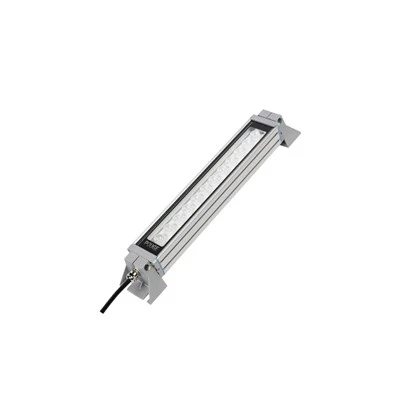
First off, before you even touch a light or a ladder, stop and figure out what your floor actually needs. This isn’t “how pretty is it for an office?”—it’s work, repetitive, sometimes dangerous work. I see so many clients grab the cheapest LED panels off Amazon because they look good, then wonder why their assembly line has 3x more quality defects. Here’s the real tea: every zone in your factory has different light rules. Let’s say you’ve got three main areas: the assembly line (super detailed, small parts), the storage warehouse (wide open, big stuff, just need to see boxes), and the loading dock (outdoor-adjacent, maybe damp, dirty).
For assembly lines? You need what’s called “task lighting” or high CCT (cool white, like 5000K-6000K)—this is the light that makes tiny screws, solder points, or fabric threads pop. If you go too warm (2700K-3000K) you’ll miss a scratch on a metal part and that’ll become a nightmare for quality control later. Then there’s the foot-candle (wait, no, lux—don’t mix these up). Assembly lines need about 500 lux minimum, some precision lines even hit 1000 lux. For the warehouse? You only need like 100-200 lux—any more is just wasting power, and factories eat that cost big time. Loading docks? Damp-rated lights, obviously—water + unprotected wires = bad news. I’ve had a client who skipped this and a dock shorted out during a rainstorm, stopped all loading for 8 hours. Ouch.
Next step: measure the space. Yeah, I know you have a building plan, but pull out the tape. I’m talking actual, on-the-ground measurements. Ceiling height is huge too—if your ceiling is 20 feet up, a flush-mount light won’t cut it; you need high-bay lights that throw light far enough down. If you put a 10ft flush-mount light on a 20ft ceiling, all the light hits the first 10ft of the floor and the back half is dark. Also, check for obstacles—pipes, cranes, conveyor belts, storage racks. Light doesn’t bend around stuff like magic. If you have a conveyor belt running down the middle, you can’t hang lights directly over it because you’ll get shadows from the belt itself. I usually tell clients to space lights 3-5ft away from conveyor lines to avoid that.
Now, the actual install prep. Don’t skip this part. First, turn off the power. Like, really turn it off—lockout/tagout it if you’re on a big factory floor. No one wants to be the person who gets zapped because they assumed the breaker was off. Then, make sure your wiring can handle the load. LEDs pull less power than old fluorescent or HID, but if you’re swapping out 100 old HIDs for 100 LEDs, you might not need a new circuit, but if you’re adding 50 extra lights (because your measurement showed dark spots), check your amperage. I’ve had a client try to save a few bucks by not upgrading the circuit, and within a week their lights were flickering and tripping breakers. Also, use the right mounting hardware. For high-bay lights on a 20ft ceiling, don’t use the cheap drywall anchors—get lag bolts rated for that weight. One of my past customers used plastic anchors and had three lights fall mid-shift; thank god no one got hurt, but that’s a total OSHA headache and a PR mess.
Let’s talk about spacing the lights. This is the part that most contractors guess at, and it’s why half the floor is bright and half is dark. The rule of thumb (and we’ve tested this with our in-house lighting labs) is to space lights so that the distance between each light is equal to the height from the light to the floor. So if your ceiling is 15ft high, each light should be 15ft apart from the next. Also, stagger them, don’t line ’em up in rows. If you line up four lights in a straight row, you’ll get those dark lines between the rows. Staggering makes the light overlap evenly, no weird gaps. Oh, and angle them slightly if you can. For areas with super wide floors, angling the lights 10-15 degrees towards the edges will light up the corners that would be dark if they’re straight down. We did this for a furniture factory a while back; they used to have to bring in portable work lights for the edge of their storage bay, now the main lights cover it perfectly.
Now, the tricky part: wiring and connections. Again, lockout/tagout isn’t optional. Even if it looks like it’s off, test the wires with a voltage tester. Also, use wire nuts rated for the environment. If you’re in a dusty sawmill or a damp food processing plant, regular plastic wire nuts will degrade in a year. Get the ones that are chemical-resistant or moisture-resistant. And don’t daisy-chain too many lights on one circuit. Most circuits can handle 10-15 LEDs, but check the specs on your lights—our standard high-bays pull 50W each, so a 15A circuit can handle like 20 of ’em, but don’t push it. Too many lights on one circuit cause voltage drops, which make them dim and burn out faster. I once had a bakery client who daisy-chained 30 lights, and half of them were half as bright within 2 months. We re-wired them and they went back to normal, and saved them another $200 a month in electricity because they were wasting power on dim lights.
Once everything is wired and mounted, do a walk test. Don’t just turn on the lights from the switch and go—walk every inch of the floor, hold your hand out 2ft above the ground, check if there are any dark spots or glare. Wait, glare! I almost forgot that. For assembly lines, glare is bad because it can cause eye strain, make it hard to see small details. Use lights with a diffuser—some of our cheaper lights don’t have them, and that’s a mistake for work areas. If you walk through and have to squint at the lights, that’s glare, and you’ll end up with employees complaining about headaches in a week. Also, check for shadows from moving equipment. If you have overhead cranes that move around, make sure your lights don’t cast a big shadow every time the crane passes. Adjust the angle or add a few extra lights in the path of the crane. We fixed that for a metal stamping factory a while back; they had 20% more defects because of shadow-related misalignment, added 4 extra lights, and that defect rate dropped to almost zero.
Wait, one last thing: maintenance, because installing is only half the battle. Most people think once the lights are up, they’re good forever, but that’s not true. Clean the light covers every 3-6 months, especially in dusty factories. Dirt on the cover can block 20-30% of the light, which makes your floor darker like you installed bad lights. And check the connections once a year—vibrations from conveyor belts or machinery can loosen wires over time, which can cause flickering or even fires.
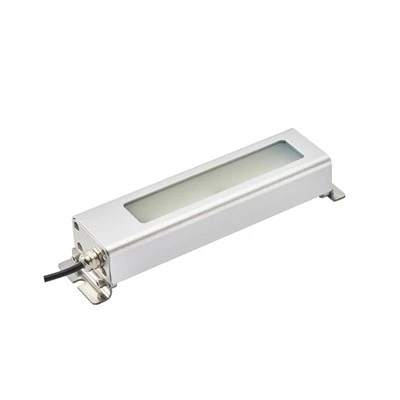
Let me wrap this up. Installing factory lighting isn’t rocket science, but it’s way more than just hanging lights and flipping a switch. Skip the guesswork, measure your space, use the right hardware and wiring, watch for glare and shadows, and don’t cut corners on the prep work. If you’re in the middle of planning a new install or replacing old lights, and you don’t want to mess this up, we’re here to help. We don’t just sell lights—we give you the actual step-by-step for your specific floor, no confusing jargon, no upselling you stuff you don’t need. Hit us up to talk through your project, and we’ll make sure your lights work for you, not against you.
Usb Stack Light References
Illuminating Engineering Society (IES). Lighting Handbook: Application Volume.
Occupational Safety and Health Administration (OSHA). General Industry Lighting Requirements.
Department of Energy (DOE). Energy Efficiency and Renewable Energy Lighting for Industry Guide.
Suzhou Pouge Lighting Electrical Appliance Co., Ltd.
As one of the most professional factory lighting manufacturers and suppliers in China, we also support customized service. Please feel free to wholesale advanced factory lighting made in China here and get quotation from our factory. For price consultation, contact us.
Address: Building 6-501, No.1330, Jinfeng South Road, Mudu Town, Wuzhong District, Suzhou City, China
E-mail: xduanlyy@126.com
WebSite: https://www.pouge-light.com/
