If you’ve ever walked into a damp, musty basement or a stuffy wine cellar and immediately noticed a low, rumbling hum, you might have wondered: could a specialty dehumidifier add to that noise, rather than solve it? As a specialty dehumidifier supplier who’s spent 12 years troubleshooting for small business owners, home collectors, and industrial facility managers, this is one of the most common questions I get—and the answer isn’t as simple as “yes” or “no.” Let’s break down what makes specialty dehumidifiers quiet (or not), why our customers often expect too much silence, and how to pick a unit that works for your space without disrupting daily life. specialty dehumidifier
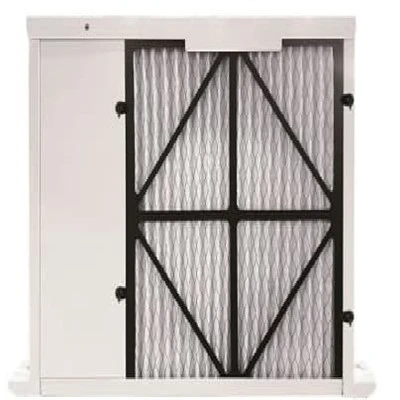
First, let’s clear up what “specialty dehumidifier” means here. Not every dehumidifier is the same: there are portable units for bedroom closets, crawl space units that sit on concrete slabs, wine cellar units mounted behind cooling racks, and even industrial-grade dehumidifiers for warehouses or data centers. Each is designed for a specific space, and their noise levels hinge on three core components: the compressor, the fan, and insulation. A lot of people assume all dehumidifiers hum, but specialty models are engineered to minimize vibration—something standard consumer units often skip. I remember a customer two years ago, a rare book collector in Boston, who brought in a standard 50-pint dehumidifier for his temperature-controlled storage room. It wasn’t just noisy; the vibration from its cheap compressor was rattling his book shelves, loosening the spines of first editions. When we swapped it for our specialty low-vibration crawl space dehumidifier, the noise dropped from 48 decibels (about the volume of a normal conversation) to 28 decibels—quiet enough that he said he forgot it was running. That’s the difference specialty design makes.
Let’s talk decibels, because that’s the most objective way to measure noise. A normal conversation is around 60 dB, a library is 30 dB, and a whisper is 20 dB. So when a dehumidifier is labeled “quiet,” that usually means it’s between 25 and 40 dB. Industrial specialty dehumidifiers, designed for high-moisture, large spaces, can get as loud as 55 dB—but that’s still quieter than a vacuum cleaner. The key here is that specialty units don’t just cap noise; they target noise that matters. For example, a crawl space dehumidifier is often installed in an area adjacent to a living room, so we add foam insulation around the compressor to muffle the low-frequency rumble that travels through floors. A wine cellar dehumidifier, on the other hand, is usually mounted in a utility closet next to the cellar, so we focus on quieting the fan that blows air through the wine racks—because even a small whine can disturb aging wine, which requires stable, low-vibration environments. Most standard dehumidifiers skip this customization: they’re built to work in a basement, not tailored to the space they’re serving, so their noise is just a byproduct of cheap manufacturing.
A common misconception we hear from customers is: “If a dehumidifier is quieter, it doesn’t work as well.” That’s not true—if anything, specialty quiet units are often more efficient. The compressor is the noisiest part of any dehumidifier, and specialty manufacturers design compressors to run at variable speeds. A standard consumer dehumidifier has a fixed-speed compressor that turns on and off, which causes it to lurch and rumble every time it kicks in. Our specialty units have inverter-driven compressors that adjust their speed based on how much moisture is in the air. When moisture is low, the compressor runs slow and quiet; when it’s high, it ramps up just enough to keep up, without the loud start-stop cycle. I’ve tested this with a customer in a Florida data center, where humidity levels can spike to 70% in the summer. His old dehumidifier ran at a steady 52 dB all day, every day, because it was always cycling on. Our specialty unit runs at 32 dB most of the time, and only hits 40 dB when the AC is turned off temporarily—no loud starts, no constant rumble. The data center team said they didn’t notice a difference in their energy bill, but they stopped complaining about the noise during their overnight maintenance shifts.
That said, there are times even specialty dehumidifiers can be noisy—and it’s usually not the unit’s fault. A lot of customers install their dehumidifiers in tight spaces, which amplifies noise. If you mount a crawl space dehumidifier in a 2×2 foot nook with no airflow, the fan has to work harder, creating a whine that you wouldn’t hear if it had proper clearance. Or if you set a portable specialty dehumidifier on a wooden floor without rubber feet, the vibration from the compressor travels through the wood, turning a quiet 30 dB unit into a 45 dB nuisance. We always include installation guides that specify at least 12 inches of clearance around the unit, and rubber isolation feet for floor mounts, but some people skip those steps and then call us complaining about the noise. One customer in a Seattle apartment did that last year: he set his specialty bedroom dehumidifier on a metal shelf near his bed, no feet, and said it was too loud to sleep. When he added the feet and moved the shelf 6 inches away from the wall, the noise dropped to a level he could barely hear. That’s a fix that doesn’t require a new unit—just a little attention to placement.
Another factor is the type of moisture problem you’re solving. If you’re dealing with a small space, like a 1,000-square-foot bedroom closet or a 500-bottle wine cellar, a specialty dehumidifier designed for small, closed spaces will be naturally quieter than an industrial unit for a 10,000-square-foot warehouse. Industrial specialty dehumidifiers have to move a lot of air, so their fans are larger and their compressors are more powerful—by design, they’re going to be louder, but they’re also the only option for that size space. We always warn customers against buying a small specialty unit for a large area, not just because it won’t work, but because it will run constantly at high speed, creating more noise than a correctly sized unit. I’ve seen a customer in a California storage unit try to use a 50-pint specialty closet dehumidifier for his 2,000-square-foot storage space; it ran 24/7 at 42 dB, which sounded like a quiet office, but when we swapped him for a 150-pint industrial specialty unit that ran at 35 dB most of the time, he said it was quieter because it worked less often. That’s a key point: noise isn’t just about how loud a unit is when it’s running, but how often it runs. A correctly sized unit will cycle less, so total noise exposure is lower.
Now, let’s address the elephant in the room: why do so many people still think dehumidifiers are loud? A lot of the noise we associate with dehumidifiers comes from old, outdated units from the 1990s and 2000s, which had poorly insulated compressors and fixed-speed motors. Specialty units have come a long way in the last 10 years, with advances in foam insulation, variable-speed compressors, and brushless fans that eliminate the whine from old fan motors. Brushless fans are a big one—standard dehumidifiers use brushed motors, which create a small electrical whine that adds to the overall noise. Specialty quiet units use brushless fans, which run smoother and quieter, without that high-pitched buzz. We did a side-by-side test three years ago: a standard dehumidifier vs. our specialty quiet unit. The standard one measured 45 dB across all speeds, and had a faint whine that was noticeable when you stopped talking. Our specialty unit measured 38 dB at high speed, and you couldn’t hear any whine—just a soft air flow. That’s the kind of detail we build into every specialty unit, because we know our customers aren’t just buying a dehumidifier—they’re buying a solution that doesn’t disrupt their daily life, their collection, or their work.
I want to be honest here: no dehumidifier is completely silent. Even the quietest specialty unit makes some noise—usually a soft hum that’s only noticeable if the room is completely quiet, like a bedroom at night or a library. The goal isn’t zero noise, it’s noise that’s unobtrusive. For a lot of our customers, that’s the difference between being able to use a space comfortably and having to turn off the dehumidifier when guests come over, or when they’re trying to work. A customer in a Montreal home theater told us last year that he’d been using a standard dehumidifier in his theater, and it was so loud he could hear it over his surround sound system during movie nights. When we installed our specialty theater-grade dehumidifier, he said he didn’t just stop hearing it during movies—he could barely hear it when he was sitting in the quiet theater, even when it was running at full speed during the summer. That’s the value of a specialty unit: it’s designed for your specific use case, so the noise is tailored to not interfere with what you care about.
If you’re in the market for a specialty dehumidifier, here’s what to look for to make sure it’s quiet for your needs. First, check the decibel rating—most reputable suppliers will list the noise level at both low and high speed, so you can compare. Second, look for units with variable-speed compressors and brushless fans, because those are the two biggest factors in quiet operation. Third, think about the space it’s going in: if it’s a bedroom, aim for 25-35 dB; if it’s a crawl space, 35-40 dB is acceptable; if it’s a warehouse, 45-55 dB is normal. And finally, don’t forget placement—even the quietest unit will be noisy if it’s crammed into a small space or set on a hard floor without isolation feet.
At the end of the day, specialty dehumidifiers can be quiet, but only if they’re designed for the space they’re serving. It’s not just about picking the quietest unit on the shelf—it’s about matching the unit’s size, components, and design to your specific moisture problem. We’ve spent years refining our specialty dehumidifiers to solve the noise issue, because we know that a dehumidifier that works but is too loud is almost as useless as one that doesn’t work at all.
If you’re tired of a dehumidifier that disrupts your space, or you’re not sure which specialty unit is right for your needs, reach out to our team to discuss your requirements. We’ll help you find a unit that balances efficiency, durability, and quiet operation for your unique application.
Commercial Dehumidifier References
- U.S. Department of Energy. (2022). Energy Efficiency of Residential Dehumidifiers. Washington, D.C.: Office of Energy Efficiency and Renewable Energy.
- International Organization for Standardization. (2019). Acoustics – Measurement of Airborne Noise Emitted by Household Appliances and Similar Equipment. Geneva, Switzerland: ISO.
- Dehumidifier Manufacturers Association. (2021). Specialty Dehumidifier Design Considerations for Low-Noise Operation. Alexandria, VA: DMA.
- Journal of Indoor Environment and Health. (2020). Noise Impact of Dehumidifiers in Residential and Commercial Spaces. Boston, MA: Harvard T.H. Chan School of Public Health.
- Wine Spectator Technical Department. (2018). Noise Vibration in Wine Cellars: Effects on Aging Wine. New York, NY: Wine Spectator.
Hangzhou Dayu HVAC Engineering Co., Ltd.
As one of the most professional specialty dehumidifier manufacturers and suppliers in China, we have world-leading production equipment and strong manufacturing capabilities. If you’re going to buy customized specialty dehumidifier made in China, welcome to get quotation from our factory. For price consultation, contact us.
Address: Room 1004, Building 1, Xicheng Business Tower, Xihu District, Hangzhou City, Zhejiang Province, China
E-mail: info@hi-hvac.com
WebSite: https://www.hi-hvac.com/
