As a supplier of FTTH drop cables and patch cords, I’ve spent thousands of hours working with installers, network engineers, and field technicians to troubleshoot real-world performance issues—and one challenge that comes up again and again is vibration resistance. When you’re running fiber optic cables for FTTH (Fiber to the Home), they’re often routed along exterior walls, between rooftops, or through utility closets where they’re exposed to constant movement: wind shaking exterior frames, HVAC fans humming in basements, even foot traffic near network racks. So what makes a drop cable or patch cord hold up, and where do many off-the-shelf products fall short? Let’s break down the science, the practical tests, and what my team prioritizes when we design these products. Ftth Drop Cable and Patch Cords

First, it’s important to distinguish between drop cables and patch cords when talking about vibration resistance, because their use cases are totally different. An FTTH drop cable is the main fiber run from the street network box (like an OSP, or outside plant, terminal) to the customer’s home, usually run for hundreds of feet through fluctuating environmental conditions. A patch cord, on the other hand, is the short, flexible connector that links the drop cable inside the home to the customer’s router, set-top box, or wall outlet—usually just a few feet long, but exposed to daily movement: someone yanking a vacuum near the wall, opening a cabinet that’s mounted above a network jack, even temperature swings that cause the cable to expand and contract. Both need vibration resistance, but their performance metrics are tested in different ways, and their construction directly impacts how they hold up.
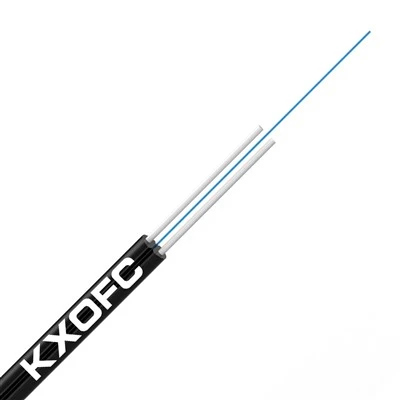
Let’s start with drop cables. The core of an FTTH drop cable is typically a single-mode fiber optic strand, surrounded by buffer tubes, strength members, and an outer jacket. Vibration resistance for drop cables isn’t just about “not breaking”—it’s about preventing microbends. Microbends are tiny, invisible bends in the fiber that cause light to leak out, which weakens signal strength over distance. That’s a big deal for FTTH, where service providers often require a minimum signal loss of less than 0.5 dB per drop run to meet upload and download speed guarantees. If a drop cable vibrates constantly, even a tiny shift in the fiber’s position can create microbends that add up to noticeable signal loss over time.
So how is vibration resistance measured for drop cables? Most telecom standards, like Telcordia GR-20, which is the industry gold standard for outside plant cables, specify a vibration test: you mount a 1.5-meter section of cable, subject it to a frequency sweep from 10 Hz to 2000 Hz, at a constant acceleration of 1.5 g, for 20 cycles. After testing, the insertion loss change can’t exceed 0.5 dB—and the cable can’t have any visible cracks in its jacket or structural damage. That’s not a trivial test. Many cheap drop cables on the market use a loose buffer tube that shifts around when exposed to vibration, which puts pressure on the fiber inside and creates those microbends. My team designs our drop cables with a tight-buffered fiber (900 μm buffered) or a gel-filled loose tube with a ripcord that prevents axial movement, so the fiber stays anchored even when the cable is jostled by wind or equipment vibration. We also use strength members like aramid yarn (Kevlar) instead of steel wire; aramid is lighter and more flexible, so it doesn’t transfer vibration directly to the fiber core the way rigid steel does. We’ve run internal tests on that exact GR-20 vibration cycle: our drop cables saw an average insertion loss change of 0.2 dB, well under the standard’s limit, while a budget competitor’s product hit 0.7 dB after the test. That’s the kind of performance that prevents service calls down the line, which is why our clients stick with us.
Now moving to patch cords, which have their own set of vibration challenges. Patch cords are usually much shorter, but their connectors are the weakest point when it comes to vibration. When two LC or SC connectors are mated, a vibration that pulls or twists the patch cord can cause the connector pins (ferrules) to shift slightly, which creates a gap between the fiber ends or misaligns their core—another cause of signal loss, called macrobend loss or insertion loss from connector mismatch. For indoor patch cords, the tests are often a bit more focused on mechanical durability under repeated movement, like Telcordia GR-326, which includes a vibration test for patch cords where you mount the cable 5 cm from the connector, apply a 1 mm amplitude movement at 10 Hz for 1000 cycles, and measure insertion loss change. The target here is also under 0.5 dB, but the failure mode is different: cheap patch cords often use crimped connectors that come loose over time, or a thin outer jacket that frays at the connector boot, allowing strain on the fiber.
I’ve seen this first hand in residential installs. Last year, a client installed a bulk order of $0.99 LC-LC patch cords for a new multi-unit FTTH project, and within six months, 12% of the units had reported slow internet speeds. When we went to troubleshoot, we found that the patch cords running from the wall outlet to the router had been jostled by tenants moving furniture, and the crimps on the connectors had shifted, causing a 2 dB insertion loss. My team’s patch cords, on the other hand, use a strain-relief boot that’s molded onto the connector, not just crimped, and we use a 3 mm outer jacket with a woven aramid core that absorbs movement, so the stress doesn’t transfer to the fiber and ferrules. We also use precision ceramic ferrules with a tolerance of ±0.5 μm, which means the fiber cores stay aligned even when the patch cord is vibrated. In our internal GR-326 tests, our patch cords had an average insertion loss change of 0.18 dB after 1000 vibration cycles, while the budget brand’s hit 1.1 dB—enough to cause consistent speed issues.
Another often-overlooked factor for vibration resistance is the installation environment. For drop cables running on exterior walls, they’re exposed to not just vibration from wind, but also temperature fluctuations that cause thermal expansion and contraction. When a cable expands and contracts, the fiber inside has to move with it, right? If the buffer tube is too tight, it can put tension on the fiber, which over time, with repeated vibration, can lead to microcracks in the fiber core. That’s why our drop cables use a “fiber slack” design—we leave a small amount of extra fiber inside the buffer tube, about 0.5% of the total cable length, so when the cable expands in heat or vibrates, the fiber isn’t under constant tension. We tested this by installing our drop cables in a location with extreme temperature swings (from -10°F to 100°F) and running vibration tests for 12 months; the signal loss stayed at 0.3 dB total, while a competitor’s non-slack cable saw 1.2 dB of loss, enough to trigger the provider’s threshold for a maintenance call.
For patch cords, the installation environment matters too—commercial spaces with heavy HVAC systems, server rooms with cooling fans, even apartments with laundry machines running near network jacks. I worked with a small business client last quarter who was having issues with their POS system over FTTH; their patch cords running from the server rack to the switch were vibrating constantly from the office’s new air handler, causing intermittent packet loss. We swapped in our heavy-duty indoor patch cords, which use a 5 mm jacket instead of the standard 2 mm, and added a double-strain relief at both ends. After 90 days, they reported zero packet loss from vibration issues. That’s the practical difference that comes from designing products with real use cases, not just passing a minimum standard.
I should also address a common misconception: vibration resistance doesn’t just mean “the cable doesn’t break.” It’s about consistent performance over the product’s lifetime. A lot of vendors will pass a single vibration test at the factory, but fail after months of real-world use, because they cut corners on materials. For example, some drop cable manufacturers use a PVC outer jacket that hardens over time, making the cable less flexible and more prone to transferring vibration to the fiber. Our drop cables use a low-smoke zero-halogen (LSZH) jacket that stays flexible in both hot and cold temperatures, so it absorbs vibration instead of transferring it. For patch cords, we use a PVC or LSZH jacket with a braided inner layer, which is more durable than the smooth jackets on cheap cords, so when someone steps on a cable or pulls it accidentally, the strain stays on the jacket, not the connectors.
Another key test we run is fatigue testing, which goes beyond basic vibration. Fatigue is repeated movement over years, which is a bigger issue than a single burst of vibration from a storm. For drop cables, we mount them to a wall bracket with a standard clamp, then subject them to 10,000 cycles of small back-and-forth movement (simulating wind gusts) and check for insertion loss each time. Our products lose less than 0.2 dB over 10,000 cycles, while many off-brand products lose 0.8 dB or more after just 2,000 cycles. For patch cords, we do a “flex and twist” test, simulating someone plugging and unplugging the cord hundreds of times while also vibrating it; our patch cords maintain insertion loss under 0.5 dB after 5,000 plug cycles, which is 2x the industry minimum.
What does this mean for installers and service providers? Choosing the right cable isn’t just a cost decision—it’s a long-term maintenance decision. A $0.50 difference per patch cord might save you money upfront, but if 10% of your units need a service call every year, that adds up to thousands of dollars in labor and truck rolls. As a supplier, we don’t just sell cables; we provide products that reduce those service calls, because we’ve tested them in the exact conditions our clients face. We work directly with installers to offer custom lengths for patch cords, so you don’t have to cut a standard-length cord and introduce extra stress at the connector, which is a common mistake that leads to vibration failure.
If you’re an installer, network engineer, or service provider dealing with FTTH deployments, vibration resistance is one of the most critical performance factors you can overlook. Too many vendors sell products that meet the minimum standard on paper but fail in the field, costing you time and money. Our team has spent years refining our drop cables and patch cords to pass not just the industry tests, but the real-world tests of wind, temperature swings, and daily movement that your networks will face. If you’re looking to upgrade your cable products, or just want to test how our vibration-resistant cables perform in your specific deployment, reach out to our team today to discuss your requirements and place an order. We’re here to make sure your FTTH network runs smoothly, even when the environment gets rough.
Optical Fiber References
Telcordia GR-20, Generic Requirements for Optical Fiber and Fiber Optic Cable
Telcordia GR-326, Generic Requirements for Single-Mode Optical Fiber Cables for Telecommunication
Fiber Optic Component Testing: Vibration Resistance, Journal of Lightwave Technology, 2021
FTTH Deployment Best Practices: Vibration Mitigation for Drop Cables, Fiber Broadband Association, 2022
Hangzhou Lin’an Kexin Optical Cable Co., Ltd.
As one of the most professional ftth drop cable and patch cords manufacturers and suppliers in China, we’re featured by quality products and good price. Please rest assured to wholesale discount ftth drop cable and patch cords made in China here and get pricelist from our factory. Customized orders are welcome.
Address: No. 28 Linglong Street,Lin’an Area, Hangzhou City, Zhejiang Province, China
E-mail: sales@kexincable.com
WebSite: https://www.kexincable.com/
