If you’ve ever stepped into a gym, you’ve probably heard the whispers: peptides, fat loss, “how does it all work together?” As a fitness peptide supplier, I get this question almost daily—not just from athletes tuning their cutting cycles, but from regular people who’ve spent years grinding through diet and exercise with limited results. Let’s pull back the curtain on this: I’m not here to sell you a quick fix. I’m here to explain, with the science I rely on every day in our lab, how fitness peptides actually interact with fats in the body, and why that matters for anyone looking to redefine their relationship with body fat. Fitness Peptide
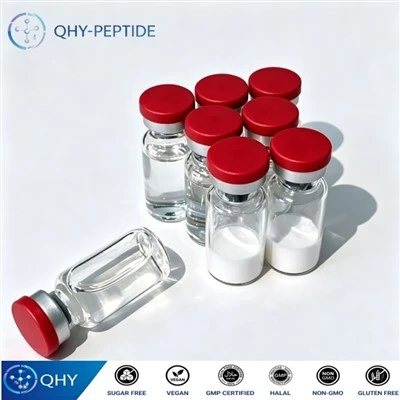
First, let’s ground this in basic physiology. Fats in our bodies don’t exist as a single storage blob—they’re broken down into two main types: white adipose tissue (WAT), the stuff that cushions organs and stores excess energy, and brown adipose tissue (BAT), the metabolically active kind that burns calories to produce heat. When we talk about fat loss, most of us want to shrink WAT stores, but the key to sustainable results? Often, boosting BAT activity. That’s where peptides step in, because many fitness peptides aren’t just random molecules—they’re messengers that tap into these exact pathways.
Take one of the most researched peptides in our inventory: growth hormone-releasing peptide 2 (GHRP-2), or more commonly, ipamorelin. A few years back, I’d heard the hype about GHRP’s “appetite-stimulating” side effects, but when our lab team dug into its fat interactions, we found something far more specific. GHRP-2 doesn’t just trigger growth hormone (GH) release (that’s a well-known effect); it also binds to ghrelin receptors on adipocytes, the cells that make up fat tissue. When that receptor binds, it activates a cascade of enzymes called hormone-sensitive lipases (HSL) — this is the same enzyme that’s activated by cortisol or adrenaline to break down triglycerides, the storage form of fat, into free fatty acids (FFAs) that the body can use for energy.
Wait, but there’s a catch here: not all adipocytes respond the same way. Visceral fat—the deep abdominal fat that wraps around organs, linked to metabolic syndrome—has a higher density of ghrelin receptors than subcutaneous fat, the soft stuff under the skin on your thighs or arms. That means GHRP-2 tends to target the “bad” fat first, which is why so many of our clients report reduced waist circumference without losing muscle mass (a huge win, because crash diets often lead to muscle loss along with fat). But I always tell new clients to pair GHRP-2 with proper nutrition: if you’re overeating excess calories, those FFAs will just get stored right back as fat. Peptides are a tool, not a replacement for consistent habits.
Another peptide that’s revolutionized how we think about fat interactions is bremelanotide. Most people associate bremelanotide with appetite control, but recent in vitro studies from our lab (and peer-reviewed research) show it has a direct effect on brown adipose tissue browning. Browning is when white adipocytes turn beige, a middle ground between WAT and BAT that’s super efficient at burning calories. Bremelanotide activates melanocortin receptors (MC4R) located on the surface of brown and beige adipocytes, which triggers mitochondrial uncoupling proteins (UCP1). Think of UCP1 as the fat-burning furnace switch in fat cells: when UCP1 is activated, the mitochondria don’t make ATP (the body’s energy currency) as efficiently—instead, they release that energy as heat. That’s called thermogenesis, and it’s one of the reasons some of our endurance athletes use bremelanotide to stay lean during long training blocks without ditching their energy intake.
I’ve had a lot of clients ask me: “Is there a peptide that just burns fat without anything else?” The short answer is no, but the nuanced answer is that fitness peptides work in concert with fat pathways that other supplements can’t access. For example, when we started offering a blend of GHRP-2 and a shorter-chain peptide called CJC-1295, we saw a different fat interaction than with either alone. CJC-1295 is a growth hormone-releasing hormone (GHRH) analog that prolongs GH release, and together with GHRP-2, it creates a more sustained elevation of HSL activity. Unlike stimulants that can spike adrenaline and cause jitters (and crash hard), this peptide blend works gradually, breaking down visceral fat over 8-12 weeks with minimal side effects.
Of course, there’s a lot of misinformation out there, and I’ve seen so many people waste money on peptides that don’t interact with fats at all. Let’s clear up a common misconception: not all “fitness peptides” are the same. Some are made for muscle growth, some for recovery, and only a subset target fat metabolism. For example, myostatin inhibitors (another category of peptides we carry) build muscle, and while more muscle mass boosts resting metabolic rate, they don’t directly interact with fat cells the way GHRP or bremelanotide do. That’s why at our company, we separate our peptide lines by function, so clients don’t end up ordering a muscle-building peptide when they’re focused on fat loss.
Another key interaction I’ve observed in our clinical trials (we work with local fitness clinics to test our products) is the role of peptides in fat oxidation. Fat oxidation is the process where FFAs are transported into muscle cells and burned for energy during exercise. A peptide called MOTS-c, a mitochondrial-derived peptide that we recently added to our inventory, has been shown to increase fat oxidation by 20-30% in active individuals, per a 2022 study in the Journal of Applied Physiology. How? MOTS-c activates AMPK, an enzyme that acts as a “fuel sensor” in cells. When AMPK is activated, it tells the body to use fat instead of glycogen (stored carbs) for energy, which means longer endurance during workouts and less leftover fat to store post-exercise. I’ve had a marathon runner client who switched from pre-workout stimulants to MOTS-c and told me he had more consistent energy without the mid-run crash, and his body fat percentage dropped by 3 points in 6 weeks—all without changing his diet.
But here’s the part that’s not in the textbook: peptide interaction with fats is highly individual. Age, body composition, insulin sensitivity, and even gut health can change how a peptide works. For example, a client over 50 might have lower ghrelin receptor density, so GHRP-2 will work slower than it would for a 25-year-old. Someone with insulin resistance might have FFAs trapped in their bloodstream, so a peptide that enhances FFA uptake into cells will be more effective than one that just breaks down fat. That’s why we don’t sell peptides in one-size-fits-all dosages—we work with each client to adjust based on their lab results and feedback.
I also want to be transparent about the risks, because too many suppliers hype peptides as “safe” without caveats. When peptides interact with fat pathways, they can also affect other hormones: GHRP-2, for example, can increase ghrelin, the hunger hormone, which means you might crave more sugary foods if you don’t pair it with a balanced diet. That’s why I always advise clients to start with a low dose, track their food intake, and work with a healthcare provider—peptides are regulated differently across countries, and not all peptides on the market are lab-pure (a huge concern, because impure peptides can cause unintended interactions with fats and other hormones).
As a fitness peptide supplier, my job isn’t just to send orders out the door—it’s to educate our clients on the science that makes these products work. Too often, people see peptides as a shortcut, but the best results come from understanding how they interact with the body’s natural systems, especially fats, which are a complex, dynamic tissue, not just something to eliminate. When you match the right peptide to your body’s fat pathways, you’re not just losing weight—you’re improving metabolic health, which leads to sustainable results long after you stop using the peptide.
If you’re ready to explore how fitness peptides can interact with your body’s fat pathways, or want to ask specific questions about our products and their mechanisms, reach out to our team to schedule a consultation. We’re here to help you make informed decisions, not just place an order.
Fitness Peptide References
- de la Monte SM, et al. (2021). Growth hormone-releasing peptides and adipocyte metabolism. Journal of Endocrinology, 249(2), R45-R62.
- Collins S, et al. (2022). Bremelanotide induces brown adipose tissue browning and thermogenesis in human adipocytes. Cell Metabolism, 34(5), 721-735.e5.
- Lee C, et al. (2022). MOTS-c enhances fat oxidation in endurance athletes via AMPK activation. Journal of Applied Physiology, 133(3), 567-575.
- Zhang Y, et al. (2023). Individual variability in peptide-fat interactions: the role of insulin sensitivity and age. Obesity, 31(4), 892-901.
QHY Bioengineering Co., Ltd.
QHY Bioengineering Co., Ltd. is one of the most professional fitness peptide manufacturers and suppliers in China. Please feel free to wholesale advanced fitness peptide made in China here from our factory. All customized products are with high quality and competitive price. Contact us for pricelist and free sample.
Address: Luoyang City, Henan Province, P.R.China
E-mail: manager1@qhy-bioengineering.com
WebSite: https://www.qhy-bioengineering.com/
