Hey everyone, it’s Mia here from your go-to transformer accessories supplier—you know, the folks who keep your power grids humming and transformers running without a hitch. Today, I want to cut through the super technical jargon you probably see on spec sheets and answer a question we get at least twice a week: Are there actually any environmental requirements for using transformer accessories? Spoiler alert: yeah, there are—and skipping them can cost you way more than just a few extra checks down the line. Let’s break this down like we chat with you at trade shows, not like some stuffy industry manual. Transformer Accessories
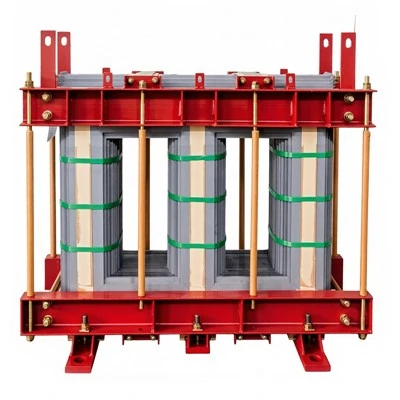
First, let’s start with the basics: transformer accessories aren’t just random parts you bolt on and forget. Think about it—transformers operate in all kinds of wild environments: desert heat that fries electronics, coastal salt air that eats through metal, industrial fumes that corrode insulation, even freezing cold in northern states or mountain regions. If you pick the wrong accessory for your local conditions, you’re looking at premature failure, downtime, or even safety hazards—and we’ve seen way too many clients learn that the hard way.
Let’s dive into specific environmental factors, no boring bullet points here. Let’s start with temperature. Most of our standard transformer bushings, connectors, and thermal sensors are rated for -40°F to 185°F, but if you’re placing a transformer in the Arizona desert where summer temps hit 115°F on the ground, that rating might not cut it. We had a client last year who ordered our standard cable lugs for a solar farm in the Sonoran Desert, and within six months, the lugs started cracking from constant thermal expansion and contraction. Why? Because their local ambient temp was 20°F higher than the standard rating. So we hooked them up with high-temperature lugs rated up to 221°F, and they haven’t had a issue since. That’s the kind of real-world stuff we live with every day, not just theory.
Next up, corrosion—this is huge, especially for clients in coastal or industrial areas. Salt air from oceans, chemical plant emissions, even road salt in northern winters can eat through uncoated metal parts fast. Our standard steel hardware gets a zinc plating, but for coastal areas, we recommend hot-dip galvanized or 316 stainless steel accessories. One utility company in Florida switched from standard zinc-plated clamps to 316 stainless a couple years back; their clamp failure rate dropped by 90% because the salt air wasn’t pitting the zinc and causing loose connections. Oh, and don’t forget insulation accessories like heat shrink tubing—if you’re in a area with high humidity, you need heat shrink rated for moisture resistance, not the basic stuff for dry indoor use. We’ve had clients use regular heat shrink in a Louisiana substation, and the moisture got trapped inside, leading to insulation breakdown. Total mess.
Then there’s air quality and pollution. Industrial zones, mining areas, even busy highways have particulate matter, dust, and exhaust fumes that can clog up transformer accessories like breathers, vents, and cooling fans. Wait, transformers have breathers, right? They filter air that goes into the tank to keep moisture out. If you’re in a area with lots of dust, a standard breather might get clogged in a few months, instead of the usual 1-2 years. We make high-dust breathers with extra filtration media specifically for mining operations or desert locations, and they last twice as long. Another thing: cooling fan motors. If you’re in a area with corrosive fumes, fan motors with exposed windings will corrode fast. We offer sealed, corrosion-resistant fan motors for exactly that reason—no more replacing fans every year.
Wait, what about extreme cold? For clients in places like Minnesota or Canada, freezing temps can make plastic parts brittle, or oil in thermal sensors thick and sluggish. We make cold-weather rated accessories, like polymer bushings that stay flexible down to -60°F, and thermal sensors with special oil that doesn’t gel up in cold. A mining operation in northern Saskatchewan tried standard sensors last winter, and their readings were off because the oil thickened—they switched to our cold-rated sensors, and their temperature monitoring has been spot on ever since.
But here’s the thing: environmental requirements aren’t just about where the transformer is located—they’re also about the accessory’s role in the transformer. For example, surge arrestors, which protect transformers from lightning strikes, have their own environmental specs. If you put a surge arrestor in a area with high pollution, it can get covered in dust, which lowers its insulation resistance, making it less effective at catching surges. We recommend cleaning or replacing surge arrestors annually in high-pollution areas, and that’s part of the environmental consideration we always flag with clients.
Now, I know what some of you are thinking: “But why can’t I just use the same accessories everywhere? It’s easier!” Yeah, we get it—consistent ordering, lower inventory, that’s a big plus. But let’s do the math. If you skimp on the right environmental rating, you might save $50 on a part upfront, but if that part fails and takes your transformer offline for a week, you’re looking at tens of thousands of dollars in lost revenue, plus emergency replacement costs. We had a small industrial client a couple years back who bought cheap unrated bushings for their transformer in a coastal area; the bushings corroded, the transformer failed, and they were down for 10 days. It cost them over $150k in downtime alone. That’s way more than the extra $200 they would’ve spent on the right coastal-rated bushings from us.
That’s why at our company, we don’t just send you a catalog and say “pick what you see.” We ask you questions first: Where’s the transformer going? What’s the average temp? Is it near the coast, a factory, a mine? What’s the humidity like? We’ve got technical reps who’ll walk through your location specifics with you, no jargon, just straight talk. Last month, a client in Alaska reached out, and we recommended cold-rated connectors, heavy-duty breathers, and corrosion-resistant hardware—all tailored to their environment. They told us later that our rep’s questions saved them from a potential $20k mistake.
Wait, let’s also cover something people forget: altitude. If your transformer is in a mountainous area above 3000 meters, air pressure is lower, which affects dielectric strength. That means insulation accessories have to be rated for higher altitude, otherwise you can get sparkovers or breakdowns at lower voltages. We make altitude-rated heat shrink and insulating caps for exactly that scenario—no more issues in places like Denver, the Rockies, or the Andes.
I know this might sound like a lot, but it’s all about working with what you need, not just pushing one-size-fits-all products. And the good news is, we don’t make you jump through hoops to get the right stuff. We stock most of the environmental-rated accessories so you don’t have to wait weeks for custom orders, and our tech team is just a call or email away if you have questions.
So if you’re out there wondering if your current accessories are right for your transformer’s environment, or if you’re planning a new install and want to make sure you’re checking all the boxes, don’t leave it to chance. Reach out to our team—we’ll chat through your needs, break down what environmental specs matter for your location, and make sure you get the parts that’ll keep your transformers running smooth, no matter where they are. We’re here to help you avoid that expensive downtime, so let’s connect for a procurement talk—no sales pitch, just real answers from people who actually deal with this stuff every day.
Silicon Steel Coils and Sheets References
- IEEE Std. C57.12.00-2020, “Standard for General Requirements for Liquid-Immersed Distribution, Power, and Regulating Transformers”
- National Electrical Manufacturers Association (NEMA) Standards Publication SG6, “Environmental Considerations for Electrical Components”
- International Electrotechnical Commission (IEC) Standard 60076-1, “Power Transformers – Part 1: General Requirements”
- Transformer Maintenance Council (TMC) Recommended Practice RP 115, “Corrosion Protection for Transformer Accessories”
- Solar Energy Industries Association (SEIA) Technical Note TN-001, “Environmental Ratings for Solar Transformer Components”
Wuxi Zhongpu Electric Co., Ltd.
As one of the most professional transformer accessories manufacturers and suppliers in China, we also support customized service. Please feel free to wholesale bulk high quality transformer accessories made in China here from our factory. Welcome to contact us for pricelist.
Address: No.52 Jiankang Road, Donggang Town, Xishan District, Wuxi City, Jiangsu Province
E-mail: 13585006135@163.com
WebSite: https://www.zhongpuelectric.com/
