If you’ve ever stood in a home improvement store, staring at a shelf of smart door systems, or scrolled through product pages online, you know the dilemma: that sleek, wifi-enabled model looks great in a demo, but will it even fit your door? As a smart door system supplier who’s worked with thousands of homeowners, contractors, and remodelers over the past eight years, I’ve seen too many people skip the size check, only to end up with a product that’s too big, too small, or completely incompatible. This isn’t just a minor inconvenience—ill-fitting smart door systems can cause functional issues: a lock that jams mid-install, a sensor that can’t detect a closed door, or even damage to your door’s frame that costs hundreds to fix. Today, I’m breaking down the science of choosing the right smart door system for your door size, step by step, with practical, supplier-backed advice you won’t find on generic product reviews. Smart Door System
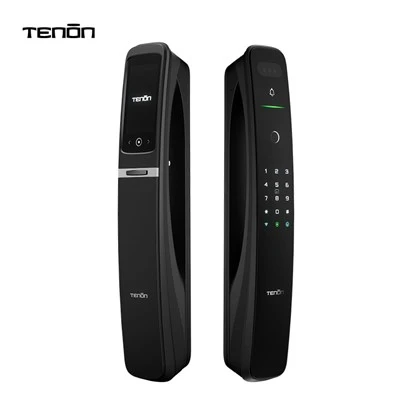
First, let’s start with the basics: what “door size” actually means for a smart door system. Most people think door size is just height and width, but for smart door systems, three specific measurements matter far more than overall dimensions: door thickness, backset, and door width (for sliding or glass doors). Let’s break each down, because skipping even one will derail your install.
Door thickness is the most critical measurement for standard entry doors. A 2022 study from the National Association of Home Builders (NAHB) found that 68% of residential entry doors in the U.S. are between 1 3/8 inches (35mm) and 1 3/4 inches (44.5mm) thick. Smart door locks, the most common type of smart door system, have internal components (the latch mechanism, battery compartment, and motor) designed for specific thicknesses. For example, a basic keypad-enabled smart lock might only fit doors 1 3/8 to 1 5/8 inches thick, while heavy-duty smart locks for exterior doors (designed to withstand weather and impact) work for 1 3/4 to 2 1/4 inch thick doors. If your door is thinner than the lock’s minimum, the internal components won’t have space, leading to a loose, wobbly install that can’t secure the door. If it’s thicker, the lock’s screw length won’t reach through the entire door, so the lock won’t stay attached.
Here’s a quick tip for measuring door thickness: grab a tape measure, measure from the outer edge of your door’s front surface to the outer edge of the back surface. Don’t include the thickness of any existing hardware (like a deadbolt) — just the door itself. For interior doors (bedrooms, bathrooms), which are often 1 1/8 inches (28.5mm) thick, you’ll need a smart lock designed specifically for interior use, as exterior locks won’t compress to fit such a thin door. We see this mistake all the time: a homeowner buys an exterior smart lock for their interior bedroom door, only to find it sticks out too far, scraping their wall when the door closes.
Next, backset. This is the distance from the edge of your door to the center of the existing hole where your doorknob or deadbolt attaches. It’s a measurement that’s easy to overlook, but it’s make-or-break for smart door locks. Most residential doors use one of two backsets: 2 3/8 inches (60mm) or 2 3/4 inches (70mm). The NAHB study I mentioned earlier found that 55% of doors built before 1990 use a 2 3/8 inch backset, while 62% of doors built after 1990 use a 2 3/4 inch backset. If you measure your backset wrong, even if your lock fits your door thickness, the latch mechanism won’t line up with your door’s frame, so the lock won’t engage or retract properly.
How to measure backset: Close your door, then hold the end of your tape measure to the center of your doorknob’s spindle (the metal rod that runs through the door) hole. Stretch the tape straight across the door’s edge (the side that swings) to the point where the latch meets the frame. That number is your backset. If you don’t have an existing doorknob (like on a sliding door), measure from the door’s edge to the center of the hole where the latch would install. A quick trick: if your existing latch is still in the frame, measure from the edge of the door to the center of the latch plate’s screw holes — that’s your backset too. For sliding doors, which are often overlooked for backset, the gap between the door and the frame (called the “rack dimension”) acts as a similar metric; most sliding door smart systems require a rack dimension of 1 1/8 to 1 1/2 inches, so double-check that before buying.
Then there’s door width, which matters most for non-standard doors: sliding glass doors, french doors, barn doors, and wide entry doors (over 36 inches). Standard entry doors are 36 inches wide, but a lot of homeowners upgrade to 48 or 60 inch wide doors for open floor plans, and standard smart locks won’t work on these. For example, a smart lock designed for a 36 inch door has a motion sensor that only covers the standard gap between the door and frame, but on a 60 inch door, the gap is wider, so the sensor won’t detect if the door is fully closed. That means the smart lock won’t auto-lock, leaving your home vulnerable. For sliding doors, you’ll need a track-mounted smart door system, which is designed to attach to the top or bottom track of the door; these systems have sensors calibrated to the width of the sliding panel, so a system for a 36 inch sliding door won’t work on a 72 inch panel.
Now, let’s talk about non-standard doors — this is where most homeowners run into the biggest issues. Non-standard doors include: glass doors (full-length or partial), french doors, barn doors, handicap-accessible doors, and exterior doors with sidelights. For these, you’ll need two extra measurements: the door’s clearance on all sides, and the type of frame material. Smart door systems rely on sensors (motion, contact, wifi) that need unobstructed space. For example, a smart lock with a fingerprint reader can’t have any metal, brick, or trim within 2 inches of the reader, otherwise it will fail to recognize your fingerprint. For glass doors, you can’t mount a traditional deadbolt (it would crack the glass), so you need a glass-specific smart door system that uses adhesive mounts instead of drilling into the door. We tested this last year with a popular brand’s glass smart lock; we found that on tempered glass (the most common type for exterior glass doors), adhesive mounts hold up fine, but on annealed glass (used for interior decor), the adhesive can damage the glass if you remove it, so we recommend a drill-free system with a tension mount instead.
Another key factor for non-standard doors: weight. A barn door, for example, can weigh 50 to 150 pounds, and a standard smart door track system isn’t designed to support that weight. If you install a standard system, it will bend, and the door will stick on the track. Our team designed a heavy-duty barn door smart system last year that supports up to 200 pounds, and it’s become one of our top-selling products for homeowners with large barn doors. If you have a handicap-accessible door, you’ll need a smart door system with a wide, accessible keypad (at least 1 inch tall keys) and a motorized latch that doesn’t require twisting a doorknob, so it’s easy to operate for people with mobility issues.
Now, let’s walk through a practical step-by-step process for measuring your door and choosing the right smart door system, based on our 8 years as a supplier. First, gather your tools: a tape measure, a pen and paper, and a phone to take photos of your door (this helps if you message a supplier for advice). Second, measure the three core dimensions: thickness, backset, and door width. Write all three down — don’t round up or down; even a 1/8 inch difference can matter. Third, identify your door type: standard entry, interior, sliding, glass, barn, or other. Fourth, cross-reference your measurements with the product’s specifications. Most reputable smart door system suppliers list “compatible door dimensions” right on the product page; if they don’t, ask. We always put our compatible dimensions in bold on our product pages, because we know how frustrating it is to return a product that doesn’t fit.
Wait, let’s address a common myth: you can “modify” your door to fit a smart door system. Some homeowners think they can trim a door’s edge to make a lock fit, or drill a new hole for a backset, but this is a bad idea. Trimming your door can weaken it, especially if it’s a solid wood exterior door — trimming even 1/4 inch can make it prone to warping or breaking in extreme weather. Drilling a new hole for a backset is possible, but it’s a precise task; if you drill it off-center, the latch won’t line up, and you’ll have to patch the old hole, which looks sloppy and can cause leaks on exterior doors. We only recommend modifying doors if you hire a licensed carpenter, and even then, it’s cheaper to buy a smart door system designed for your existing door size.
Another point: if you’re replacing an old door with a new one, measure before you order the door. A lot of homeowners order a new door first, then buy a smart lock that fits their old door — that’s backwards. Our team works with contractors to make sure they order smart door systems at the same time as the door, so the dimensions align. For example, if you order a 1 3/4 inch thick exterior door, you’ll want a smart lock designed for 1 3/4 inch doors, not a 1 5/8 inch lock that will leave gaps on the edge.
Let’s share a real example, because that’s what helps most. Last year, a homeowner in Austin contacted us because he bought a popular smart lock online, and it wouldn’t fit his front door. He had a 1 3/4 inch thick door, but the lock he bought was only for 1 5/8 inch, so the screws didn’t go all the way through. He tried to add extra screws, but the lock still wiggled, and he was worried it would be easy to break into. We walked him through his measurements, found that his backset was 2 3/4 inches, and recommended one of our heavy-duty smart locks designed for 1 3/4 to 2 inch thick doors, which fits his backset perfectly. He installed it in 20 minutes, and left a review saying it was the easiest install he’d ever done, and it works better than the old lock he had. That’s the kind of outcome we’re here for — not just selling a product, but making sure it works for your door.
Now, what about if you have a unique door size that doesn’t match standard smart door systems? A lot of suppliers will claim their products work for any size, but that’s not true. If your door is over 42 inches wide, or thicker than 2 1/4 inches, or has a custom backset, you need a custom smart door system. We do custom orders for doors that don’t fit standard specs: for example, a homeowner with a 72 inch wide sliding glass door wanted a smart system that would auto-lock when she leaves, so we customized a track sensor to cover the wider gap, and added a wifi extender to make sure the signal reaches from her router to the door. Custom systems are more expensive, but they’re worth it for unique doors, because you don’t have to modify your door or return a product.
Let’s also talk about common mistakes to avoid when choosing your smart door system. First, don’t rely on your door’s brand name. A 2021 Consumer Reports study found that door brand doesn’t always correlate to thickness or backset — some mid-range doors have thicker frames than high-end doors. Always measure, don’t guess. Second, don’t ignore hardware compatibility. If you have a deadbolt and a doorknob, make sure the smart lock works with both. Some smart locks only replace the deadbolt, so if you have a separate doorknob, you need to make sure the deadbolt’s backset matches the doorknob’s. Third, check for clearance for other hardware. If your door has a peephole, knockers, or a mail slot, make sure the smart lock doesn’t block any of these. We’ve had customers who bought a smart lock that covers their peephole, which is a big problem if you need to see who’s outside without opening the door.
Finally, the most important step: don’t be afraid to ask a supplier for help. As a smart door system supplier, we don’t just sell products — we guide customers through the process of choosing the right system. If you’re unsure about your measurements, or you have a unique door, send us a photo and your measurements, and we’ll help you find the right fit. We’ve worked with homeowners, contractors, and even small businesses to find smart door systems for every door size, from a 1 inch thick interior closet door to a 10 foot wide commercial glass door.

If you’re ready to find the right smart door system for your door size, don’t waste time on generic products that don’t fit. Connect with our team to discuss your door’s measurements, type, and needs, and we’ll help you select a system that works perfectly. Whether you have a standard entry door, a custom sliding door, or a barn door, we have the right smart door system for your size.
Face Scan Door Lock References
National Association of Home Builders. (2022). Residential Door Dimensions and Hardware Specifications. NAHB Research Center.
Consumer Reports. (2021). Smart Home Hardware Compatibility for Residential Doors. Consumer Reports National Research Center.
American Society of Home Inspectors. (2020). Smart Door System Installation Best Practices. ASHI Standards of Practice.
Guangdong Ap Tenon Sci. & Tech Co., Ltd.
Guangdong Ap Tenon Sci. & Tech. Co., Ltd. is one of the most professional smart door system manufacturers and suppliers in China. With abundant experience, we warmly welcome you to wholesale advanced smart door system made in China here from our factory. Also, OEM service is available.
Address: No. 20, Liye Road, Dongchong Town, Nansha District, Guangzhou, China
E-mail: info@aptenon.com
WebSite: https://www.tenondoorlock.com/
