If you’re reading this, you’ve probably found yourself staring at a product spec sheet for integrated magnetics, refreshing your inbox for a quote, and then doing a double take when you see the lead time section pop up: “4–12 weeks?” Wait, really? Yeah, I get it—you’re probably used to ordering off-the-shelf parts that show up in 3 days, so seeing a range that wide can feel like someone gave you a recipe with “a handful” and “a dash.” Let’s cut through the confusion today, since I’m on the front lines of this as an integrated magnetics supplier, and I field this exact question from engineers, procurement teams, and small startup founders at least 10 times a day. No corporate jargon, no vague excuses—just the real scoop on why lead times are what they are, what affects them, and how we can make them work for you. Integrated Magnetics
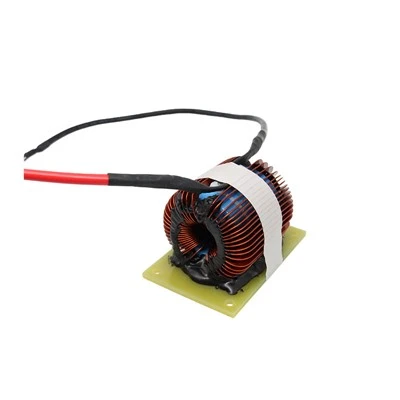
First, let’s get one thing straight: integrated magnetics aren’t your run-of-the-mill inductors or transformers you grab from a big box electronics distributor. Those off-the-shelf parts are mass-produced in high volumes for generic applications like basic power supplies or low-speed motor drives. Integrated magnetics, though? They’re custom-built (or semi-custom, at minimum) to fit your specific design. That could mean anything from tweaking the core shape to fit a tight PCB footprint, adjusting the inductance value by 5% to fix a resonance issue, or integrating multiple magnetics (like a transformer and two inductors) into one single core to cut down on size and weight for your high-efficiency server power supply or EV on-board charger. Every order is unique in some way, which is why lead time isn’t a single number—it’s that 4–12 week range. But let’s break that range down so you know exactly where your order will land, and why.
The fastest end of that range, 4–6 weeks, is for orders that fall into what we call “semi-custom, off-spec” parts. Let’s say you need a standard core size (one we keep in stock, no custom tooling needed) with a very minor tweak: maybe you need the winding count adjusted slightly, or the insulation rating bumped up a notch that doesn’t require changing the core shape or lead frame. For example, a client last month was working on a 48V telecom power supply and needed a 10uH inductor that was 2mm shorter than our standard stock part. We had the core already, so it was just a matter of re-winding, testing, and boxing it up. That took 4 weeks, start to finish. Another caveat here: if you’re ordering small quantities—say 50 pieces for a prototype build—this is the sweet spot. Prototype orders almost always land in the 4–6 week window, because we prioritize small batches to help teams get their designs out the door.
Now, the middle of the range, 6–9 weeks, is where most production orders fall. This is for orders that need minor custom tooling, or a slightly non-standard performance spec, but not a total ground-up redesign. Let’s say you’re launching a new line of EV chargers, and your design needs a custom planar transformer that fits a 100x80mm PCB, operates at 100kHz, and handles 3kW of power. We don’t have an existing core that fits exactly that PCB footprint, so we need to mill a new core tool—nothing super complex, but it requires a couple of days of design, testing, and tweaking to make sure the core doesn’t saturate at full load. We’ll also need to build a custom winding jig to get the tight winding tolerance you need for efficiency. This is the sweet spot for mid-sized production runs, like 500–2,000 pieces, where you’re moving beyond prototypes but not ordering enough to lock down a super long lead time for full production setups. We’re not rushing, but we also don’t have to wait for multiple layers of design review for a total custom build.
The longest end, 9–12 weeks, is for full custom orders for high-volume production. This is when you need something that doesn’t exist anywhere in our library, like a high-power integrated inductor for a data center server that needs to fit in a very tight, high-heat space, or a magnetics module that integrates a transformer, two inductors, and a common-mode choke all into one core. For these, we have to start from scratch: our engineering team will work with yours to run FEA (finite element analysis) simulations to test core saturation, winding losses, thermal performance, and even EMI characteristics. Then we’ll design the core, create tooling that’s tailored exactly to your specs, build a prototype batch for testing, iterate if needed (sometimes the first core design doesn’t hit the thermal targets, so we tweak the core shape), and then prep for full production. This part takes time—for example, a client working on a 10kW data center power supply last year needed a fully custom integrated magnetics module, and that took 11 weeks from the day they signed off on the spec sheet to delivery of the first production batch. High-volume orders (over 2,000 pieces) usually fall here, because we want to make sure the design is perfect before we commit to a full production run that would be expensive to adjust later.
Wait, but before you panic and think “12 weeks is too long,” let’s talk about the variables that can make lead time shorter or longer, because it’s not a fixed rule. First, communication. The biggest delay we see is when a client sends a vague spec: “I need a transformer for a power supply, something around 5kW.” The more specific you can be about your specs—inductance, voltage, current, frequency, PCB footprint, operating temperature range, quantity, and even your project deadline—the faster we can turn that around. Last month, a startup founder sent over a spec sheet with every exact number, and we had a prototype ready for testing in 3 weeks, which is faster than our usual prototype timeline because we didn’t have to back and forth 5 times to clarify what they needed.
Another big variable is tooling lead time. If we have an existing tool that works for your order, we can skip a whole week or two of designing and milling new tooling. That’s why we always recommend checking our library of existing parts first—9 times out of 10, a small tweak to an off-the-shelf part will work for your design, and that cuts lead time way down. For example, a client working on a portable medical device needed a tiny integrated magnetics module. They initially thought they needed a custom core, but we found an existing core that was almost exactly the size they needed, so we just adjusted the winding and added a small shield, and their lead time was 5 weeks instead of 10.
Also, order volume matters, but not in the way you’d think. Small prototype orders (less than 100 pieces) are prioritized, because they’re usually time-sensitive for R&D. We actually slow down a little on very large production runs (over 5,000 pieces) to make sure we get every test right, because a defect in a full production order costs both of us time and money. So if you have a small prototype, don’t worry—we won’t put it on the back burner for a big bulk order.
What about delays outside our control? Yeah, no supplier is perfect. Sometimes material lead times shift—like, if we use a specific type of ferrite core that’s backordered, that can add a week or two. Or global logistics snags, especially if you’re ordering internationally. That’s why we always give a firm lead time once we review your order, and we update you every step of the way—if there’s a delay, we tell you upfront, no hidden surprises. We’ve all been burned by suppliers that ghost you when parts are late, so we try to over-communicate, not under-communicate.
Now, let’s address the question I get next: is there a way to get my order faster? Short answer: sometimes, but not always. If your order is a prototype and you have a tight deadline, we can sometimes squeeze it into our schedule for an extra fee, but we’re pretty strict about that because cutting corners on magnetics can lead to big issues later—like overheating, lower efficiency, or EMI problems that mess up your whole design. We’d rather get it right than rush it and have you come back a month later with a broken product.
Another tip: plan ahead. If you know your project is launching in 6 months, reach out to us now, even if you don’t have all the specs finalized. We can start the initial design work, so once you lock in your specs, we can move into production faster. We regularly work with clients on long-term design partnerships, so we can reserve tooling for future orders if you think you’ll be coming back for more parts.
Let’s wrap this up with a real example to make it concrete. A few months ago, a team at a renewable energy startup reached out to us needing integrated magnetics for a 20kW solar inverter prototype. They were at the point where they had a breadboard working, and they needed a production-ready design to test in field trials, which were scheduled in 10 weeks. Their spec was for a custom integrated transformer and inductor module that fit a 150x100mm PCB, handled 20kW, operated at 50kHz, and had an efficiency rating of over 98%. At first, we quoted them 10 weeks, which aligned with their deadline. But because they provided all their thermal and EMI requirements upfront, we were able to run the FEA simulations in parallel with tooling design, cutting 1 week off the timeline, and they got their order in 9 weeks, just in time for their field trials. That’s the sweet spot—clear communication, specific specs, and a supplier that works with your timeline, not just their own.
So to circle back to the original question: what’s the lead time for integrated magnetics orders? It’s not a random number pulled out of thin air. It’s based on how custom your design is, how much communication we have, how much material we have on hand, and how strict your specs are. The 4–12 week range is our average, and we’re transparent about where your order will fall once we talk through your needs. No, it’s not as fast as ordering a plastic enclosure off Amazon, but that’s because we’re building something that will make your product work better, be smaller, and more efficient than off-the-shelf parts.
High-Frequency Transformers If you’re curious about a specific lead time for your order, don’t hesitate to reach out and talk through your project. We’ll walk you through every step, let you know exactly what to expect, and make sure your order gets the attention it needs. No sales pitches, no confusing jargon—just straight talk about integrated magnetics lead times and what works for your design.
Shenzhen Haoyanlin Electronics Co., Ltd.
With abundant experience, we are one of the most professional integrated magnetics manufacturers and suppliers in China. Please feel free to buy advanced integrated magnetics made in China here from our factory. All custom made products are with high quality and competitive price.
Address: Room A306, Building A, Hongwan Business Center, No.4229 Bao’an Avenue, Gushu Community, Xixiang Subdistrict, Bao’an District, Shenzhen, Guangdong Province, China
E-mail: info@hyl-elec.com
WebSite: https://www.hyl-elec.com/
