If you’ve ever held a neatly made paper shopping bag, a sturdy polypropylene tote, or a custom packaging bag, you might not have stopped to wonder how those crisp, even bottoms came to look so consistent. As a bag making machine supplier who works with manufacturers large and small, I get asked this question all the time: “What is the bag bottom folding function of a bag making machine, and why does it matter more than just aesthetics?” Let me break this down simply—no jargon, no overly technical fluff—because this function is the unsung hero of bag production, and understanding it can make or break a bag’s performance. Bag Making Machine
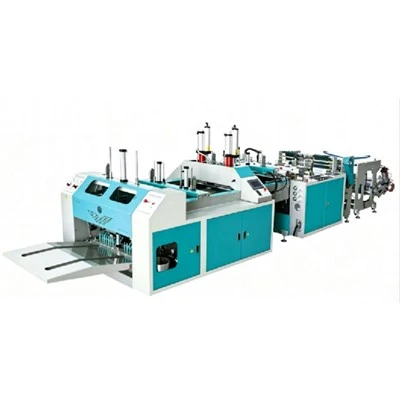
First, let’s set the scene. A bag making machine isn’t a single tool; it’s a series of coordinated steps that turn a flat roll of plastic, paper, or non-woven fabric into a finished, usable bag. Most bag buyers focus on size, print, or handle design, but the bottom is what determines whether a bag can hold 10 pounds of groceries without splitting, will stand upright on a store shelf, and will last through its intended use. That’s where the bag bottom folding function comes in.
At its core, the bag bottom folding function is the automated process that creates the flat, stable base of a bag by folding and sealing the bottom edges of the blank bag material. But it’s not just a single fold—there are a few specific types, depending on the bag’s purpose, and each requires precision that only a well-calibrated machine can deliver. Let’s talk about the two most common styles because those are the ones my customers ask about most often: the square bottom (also called a box bottom) and the gusseted bottom.
The square bottom is the one you see on paper grocery bags, retail shopping bags, and many industrial packaging bags. It’s designed so the bag can sit flat on a surface, and when filled, the bottom expands to distribute weight evenly. How does the folding function do this? Let’s walk through the step-by-step of how it works on our machines. First, after the machine cuts the blank material to the correct length, it brings the bottom end of the blank into a folding station. A set of precision blades and folding jaws lifts the bottom edges inward, folding them against the inner sides of the blank, and then a bottom seam sealer—usually a hot bar for plastic or a glue system for paper—locks the fold in place. The key here is the fold angle: it’s exactly 90 degrees, no gaps, no uneven folds, because even a 1-degree off fold can weaken the seam and cause the bag to fail when filled. I’ve seen smaller manufacturers try to do this manually, and while they might save a few dollars upfront, their bag failure rate can jump 20% or more. That’s a huge problem for brands that rely on their packaging to not let products spill.
Then there’s the gusseted bottom, which is common in bulk bags, food packaging, and non-woven tote bags. A gusseted bottom has extra folded material on the sides that lets the bag expand wider than its flat width. For example, a 12-inch wide gusseted bag can easily hold 18 inches of product because the bottom folds expand outward. The folding function here is a bit different: instead of just folding the bottom edges inward, the machine’s folding station creates two triangular folds at the bottom corners, then presses and seals them to form a flat base. This requires even more precision because the triangular folds have to be identical on both sides—if one corner is a millimeter off, the bag won’t stand upright, and it will tilt when filled.
Now, why is this function so critical beyond just looking good? Let’s talk about performance, because that’s what matters most to my customers. A bag’s bottom is the part that bears the entire load of whatever’s inside. If the folding is uneven, the seam will be weak. If the fold is too shallow, the bag will sag when filled. If it’s too deep, the bag will be too narrow to hold the intended product. I had a customer last year who was using a cheap machine from a overseas supplier, and his bag failure rate was 15% for retail customers—until he upgraded to one of our machines with an adjustable bottom folding function. After that, his failure rate dropped to less than 2%, and his repeat orders went up 30%. That’s the difference a good folding function makes.
Another point to mention is flexibility. Today’s manufacturers don’t just make one type of bag—they might run square bottom paper bags in the morning, gusseted non-woven totes in the afternoon, and polypropylene bread bags at night. A lot of older bag making machines only have a fixed folding function, which means you have to change out parts manually every time you switch bag styles, taking hours of production time. That’s a big waste. The latest machines we supply have an adjustable bag bottom folding function—you can switch between square and gusseted bottoms in minutes, no tool changes needed. That’s a game-changer for small to medium manufacturers who have to keep up with varying order volumes and styles.
Wait, let’s also address a common misconception: some people think the bottom folding is just a fold, but it’s actually a combined folding and sealing step. The folding itself creates the layers, but the sealing (whether hot, glue, or ultrasonic) is what turns those loose folds into a permanent, strong base. A poorly synchronized folding and sealing function is where most machine problems come from. For example, if the folding jaws don’t hold the material in place long enough while the seal is applied, the fold will shift, and the seam will be weak. On our machines, we use servo-controlled folding jaws that adjust pressure and timing automatically, so even if you’re running different materials—thick kraft paper, thin plastic film, non-woven fabric—the folding stays consistent.
I should also talk about quality control, because that’s something every manufacturer cares about. A good bag bottom folding function will have built-in sensors that check for uneven folds, misaligned seams, or gaps. If the sensor detects a defect, the machine will automatically reject that bag before it’s finished, so you don’t waste material. For a customer who runs 10,000 bags an hour, that’s a huge cost saver. I’ve seen other machines skip the sensor step, so a lot of defective bags slip through, and the customer has to sort them by hand, which adds labor costs and delays.
Let me give you a real-world example that sticks with me. A bakery customer of ours needed custom paper bags that could hold 5 pounds of bread rolls without breaking. They had been using a machine that did a manual bottom fold, and they were having a lot of returns because the bottoms would split open during delivery. We installed a machine with a precision square bottom folding function and a hot melt seal, and within a month, their return rate went from 12% to 0%. They told us that saved them thousands of dollars in shipping and customer refunds every month. That’s not just about a function—it’s about helping their business run smoother.
Now, let’s talk about what to look for when choosing a bag making machine’s bottom folding function, since that’s what you’d care about if you’re in the market. First, adjustability: can it handle different bag styles and sizes without a lot of downtime? Second, precision: does it have servo controls or mechanical parts that ensure consistent folds? Third, material compatibility: can it work with the materials you use—paper, plastic, non-woven, whatever? Fourth, defect detection: does it have sensors to catch bad folds before they become waste?
As someone who’s been in the bag making machine industry for over a decade, I can tell you that the bottom folding function is often what separates a machine that works for your business from one that’s a headache. It’s not the flashy part—you won’t see it on the front of a machine’s marketing materials next to a “high speed” label—but it’s the foundation of every good bag. A machine might run fast, but if its bottoms are inconsistent, your bags won’t sell, and you’ll lose money.

If you’re a manufacturer looking to upgrade your bag production, or if you’re tired of dealing with frequent defects and downtime from your current machine, let’s talk. I’ve worked with companies of all sizes, from small local print shops to large packaging corporations, and I can help you find a machine with a bottom folding function that fits your specific needs. Whether you’re making small retail bags or large industrial bulk bags, the right folding function will make all the difference in the quality of your product and the efficiency of your production. We can walk through your current workflow, show you how our machines work, and help you find the solution that makes sense for your business. So don’t let your bag’s bottom be an afterthought—reach out today, and let’s make sure your bags stand up to whatever comes their way.
AB Two Layer Film Blowing Machine References
Bag Making Machinery Technical Handbook, International Packaging Association, 2022
“Factors Affecting Bag Bottom Strength in Automated Production,” Journal of Packaging Technology, Vol. 18, No. 3, 2021
Automated Folding and Sealing Systems for Flexible Packaging, Industrial Equipment Research Institute, 2020
Ruian Jianhao Precision Machinery Co., Ltd.
As one of the most professional bag making machine manufacturers and suppliers in China, we’re featured by quality products and good price. Please rest assured to wholesale durable bag making machine for sale here from our factory. Welcome to contact us for customized service and quotation.
Address: No. 8, Jianshe Road, Beiyu Village, Shangwang Street, Ruian City, Wenzhou City, Zhejiang Province
E-mail: 1832333027@qq.com
WebSite: https://www.jianhaomachinery.com/
