If you’ve ever stood in the bedding section of a store or browsed online for a new comforter, you know it’s easy to get overwhelmed. Labels scream “ultra-plush” or “hotel-quality,” but how do you separate a comforter that’ll last five years from one that’ll clump and fade after a single wash? As someone who’s been a comforter supplier for over a decade, I’ve helped hundreds of customers navigate this exact question—mostly because I’ve seen the mistakes folks make when they prioritize price over quality. Cheap comforters might look good on the shelf, but skimping on the small details will leave you unsatisfied fast. Today, I’m breaking down the science (and real-world lessons) to help you spot a high-quality comforter, straight from the supply side. Comforter

First, let’s start with the fill—this is the heart of any comforter, and it’s where 70% of a comforter’s quality lives. Not all fills are created equal, and the difference between a cheap fill and a premium one isn’t just fluff (pun absolutely intended). Let’s split fills into two main categories: down and down alternative, since those are the most common on the market. For down, the key metric is fill power. Fill power measures the volume one ounce of down takes up, and it directly ties to warmth, lightness, and durability. A high-quality down comforter will have a fill power of 600 or higher—we stick to 700 to 800 fill power for our own products, and for good reason. Here’s the science: higher fill power means the down clusters are larger and more intact, so they trap more air (the best insulator) without being heavy. A 600-fill down comforter will weigh roughly 20% less than a 500-fill one with the same warmth rating, and it’ll bounce back way better after you fold it. I remember a customer once brought back a 500-fill comforter she’d bought on sale online because it flattened within a month—she’d only paid $50 for it, but she replaced it with a 750-fill one from us that’s still going strong three years later.
If you’re looking for down alternative (great for allergies or ethical preferences), don’t just grab the one labeled “hypoallergenic.” Look at the fill material itself. Premium down alternative uses hollow-core synthetic fibers, like polyester, that mimic the structure of down clusters. This hollow core traps air just like real down, so it’s warm and lightweight, not stiff or plastic-y. Cheap down alternative uses solid, low-density fibers that clump easily—run your hand over the surface of the comforter; if you feel hard, lumpy spots, that’s a sign the fibers are already breaking down. We’ve tested both: our hollow-core alternative fills maintain their loft for twice as long as solid-core fills, even after 50 washes. Another trick for any fill: give the comforter a gentle squeeze. A high-quality one will expand back to its full, puffy shape almost immediately. If it stays flat or takes a long time to fluff up, the fill is low-grade.
Next up, the shell fabric—this is what’s on the outside, and it’s not just about how it feels against your skin. The shell has two jobs: it has to keep the fill inside (no feathers poking through!) and it has to be durable enough to withstand regular washing and years of use. For down comforters, the shell needs to be tightly woven to prevent down leakage, called “feather ticking.” Ticking happens when the gaps between fabric threads are big enough for small down clusters to slip through, usually after a few washes. A good shell will have a thread count of at least 230, and it’ll feel smooth, not scratchy. We use a 250-thread-count cotton shell for our down comforters—its medium weight balances breathability and durability. Thread count is key here: a higher thread count isn’t always better, though. Anything over 300 can be too tight, which makes the comforter feel stuffy, and it might not breathe as well. For down alternative comforters, shell fabric is a bit more flexible—you can get away with a 180 to 220 thread count, but make sure it’s a “microfiber” or “peach skin” finish only if it’s of good quality. Cheap microfiber pills after a few washes, while premium microfiber stays soft and smooth.
Wait, there’s another detail with the shell: the edge. A lot of low-quality comforters have a thin, frayed edge that starts to tear after a few uses. High-quality comforters have a finished, reinforced edge—usually a wide hem or a piped border. This not only looks nicer, it adds structural support, so the comforter doesn’t stretch out of shape when you’re pulling it over your bed. I’ve seen so many customers skip over the edge details in favor of a lower price, only to have their comforter develop holes in the edge within a year. Spend the extra 10 or 15 dollars for a comforter with a finished edge, and it’ll last twice as long.
Quilting is the next big check—this is how the fill is held in place, and it’s what prevents all the fill from shifting to one corner, which is a common complaint. There are two main quilting styles: sewn-through and baffle box. Let’s break them down. A sewn-through comforter is the most common, especially in mid-range products. It’s stitched through the entire shell, top to bottom, which keeps the fill from shifting. But cheap sewn-through comforters use short stitches or thin thread, so the quilting will come undone quickly. High-quality sewn-through comforters use thick, durable thread with even, tight stitches, usually spaced 4 to 6 inches apart. If you look at the surface of the comforter, the stitches should be neat and uniform—no loose ends or skipped stitches.
Baffle box quilting is the premium option, used in top-tier comforters. Here, there’s a vertical strip of fabric (the baffle) between the top and bottom shells, which creates individual boxes for the fill. This means the fill is fully contained in each box, so it doesn’t shift at all, and the comforter is more puffy and consistent. Baffle box quilting is also warmer because there’s no compression from the stitches that sewn-through quilting has. But it’s more expensive to make, so you’ll only see it on higher-end comforters. That said, a good sewn-through comforter can be just as durable as a baffle box one, as long as the stitching is high quality. I always tell customers to test the quilting: push your finger into the comforter and feel for how the fill is distributed. If it lumps in one spot or feels empty in another, the quilting is poor.
Washing and care labels are a huge, overlooked clue to quality. Any comforter worth its salt will have clear, specific care instructions, not just a vague “machine wash cold.” Low-quality comforters often require dry cleaning only, or they’ll shrink, bleed color, or lose fill after a single machine wash. Premium comforters are designed to be machine washable at home—we design all our comforters to withstand 50+ washes without pilling, shifting, or losing loft, and our care labels reflect that. If a comforter says it needs professional cleaning, that’s a red flag: it means the fill or shell is too cheap to handle regular home washing. Another thing to check: the label will specify if it’s OEKO-TEX certified or another third-party safety standard. OEKO-TEX means the materials are free from harmful chemicals, which is a good sign for both your health and the environment. Cheap comforters often use low-quality dyes or synthetic materials that can off-gas, so that certification is a quick way to spot a better product.
Now, let’s talk about weight and warmth—this doesn’t mean the heavier the comforter, the warmer it is. That’s a common myth. A good comforter will have a balanced weight that keeps you warm without feeling like you’re wrapped in a blanket. For down, warmth is measured by “fill power” and “loom weight” (the total ounces of fill), not just total weight. A 10-ounce 750-fill down comforter is warmer and lighter than a 12-ounce 500-fill one. For down alternative, it’s similar: hollow-core fills are lighter than solid-core fills for the same warmth. To test warmth, hold the comforter up to a window. High-quality comforters will let a small amount of light through, but not so much that you can see the fill. That’s a sign the fabric is breathable, which is important to keep you from overheating at night. Cheap, low-quality comforters will block almost all light because they’re made with dense, non-breathable materials.
Another thing I’ve learned over the years: check for return policies. A reputable comforter supplier will offer a 30 to 60 night trial period, because they’re confident in their product. If a company won’t let you return a comforter if you don’t like it after using it for a few weeks, that’s a sign they don’t stand behind their quality. We offer a 60-night trial on all our comforters for exactly that reason—we know once you sleep with a high-quality one, you’ll never go back to a cheap version.
Let’s wrap this up with a quick checklist you can use next time you’re shopping:
- Check the fill: For down, look for 600+ fill power; for alternative, look for hollow-core fibers. Squeeze it—does it bounce back fast?
- Check the shell: Thread count 230+ (for down) or 180+ (for alternative). Is the edge finished and reinforced?
- Check quilting: Even, tight stitches for sewn-through, or uniform boxes for baffle box. No lumpy spots.
- Check the care label: Machine washable, third-party certified (like OEKO-TEX), no vague instructions.
- Trust the trial period: If a supplier won’t let you test it, keep shopping.
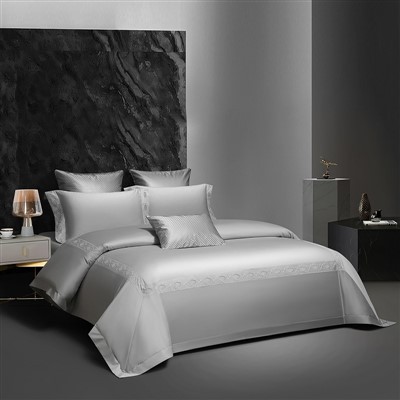
At the end of the day, a good comforter is an investment in your sleep. You spend a third of your life in bed, so why skimp on something that’ll make those nights more comfortable? As a comforter supplier, I’ve seen firsthand the difference a quality product makes—our customers come back year after year because their comforters last, they sleep better, and they don’t have to replace their bedding every six months. If you’re in the market for a new comforter and want to skip the trial and error, reach out to discuss your needs and find the right fit for your home.
Cotton Multi-piece Bedding Set References
International Down and Feather Testing Laboratory. (2022). Down and Feather Fill Power Standards.
Textile Institute. (2021). Thread Count and Fabric Durability in Bedding.
OEKO-TEX Association. (2023). Standard 100 for Bedding Products: Key Quality Indicators.
Jiangsu Weisha New Energy Technology Co., Ltd.
As one of the most professional comforter manufacturers in China, we’re featured by quality products and low price. Please rest assured to buy discount comforter made in China here and get quotation from our factory. We also accept customized orders.
Address: Buildings 13-14, Standard Factory Building, Sanhe Kou Village, Chuanjiang Town, Tongzhou District, Nantong City, Jiangsu Province
E-mail: 348030855@qq.com
WebSite: https://www.weishatex.com/
