RV road trips are amazing, right? The open road, the freedom to camp wherever, and turning your home on wheels into a cozy little escape. But let’s be real—nothing kills a good trip faster than a hidden water leak. I’ve been in the smart leak detection system game for 8 years, and I can’t tell you how many times a customer has called me sobbing from a campground in Ohio at 2 a.m. because they came back to their RV after a day of hiking and found water pooling around their favorite leather couch, or worse, mold starting to grow in the walls. That’s why I get asked all the time: “Can a smart leak detection system actually work for an RV?” Spoiler alert: Yeah, it’s not just possible—it’s kind of a game-changer, if you set it up right. Smart Leak Detection System
First, let’s break down why RVs are such leak-prone machines in the first place. Your sticks and bricks house has permanent plumbing, a foundation that doesn’t move, and you check under sinks every few months for drips. But an RV? It’s a moving machine. It bounces down back roads, gets pelted with rain and snow, temperatures swing from 100°F in the desert to 20°F in the mountains, and every time you park or unhitch, the pipes, seals, and joints shift. A tiny drip from a cracked water line or a faulty seal on your freshwater tank might not seem like a big deal at first—until it eats through your floor, rots your cabinetry, or triggers mold that’s impossible to get rid of. I’ve seen a $50,000 class A motorhome totaled because a leak from a loose pipe under the kitchen sink was left unchecked for a week while the owner was working out of state. That’s the exact scenario our systems are built to prevent.
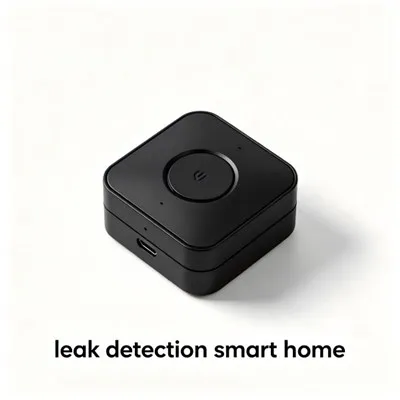
Now, let’s talk about how smart leak detection works specifically for RVs, not just houses. Your average home system is wired into a central control panel, has big water sensors under floors, and uses a lot of power—stuff that’s not practical when you’re boondocking, dry camping, or relying on your RV’s battery instead of city power. Our RV-specific systems are small, low-power, and super easy to install—no need to pay a mechanic $200 an hour to rip apart your cabinets. We’ve got two types of sensors: contact sensors that stick right to pipes, tanks, and fittings, and moisture sensors that lay flat on floors, under sinks, and around your water heater. The whole thing connects to your phone via Bluetooth or weak cell signal, so no matter if you’re 5 miles from a campground hookup or 100 miles deep in the woods, you get a text or a phone alert the second a leak is detected—no more coming home to disaster.
Wait, but what about power? That’s a huge pain point for RV owners, right? You don’t want a system that drains your battery when you’re off-grid. Our sensors run on coin batteries that last 3+ years, and the central hub uses less power than your RV’s smoke detector. We also built in a sleep mode that activates when your RV is parked for more than 24 hours, so it’s not draining power while you’re gone on a trip. A lot of older leak detection options on the market are just repurposed home systems that don’t account for RV’s limited power, and that’s why they get a bad rap. Ours is purpose-built for tiny, mobile spaces—perfect for travel trailers, fifth wheels, and motorhomes of all sizes.
Let’s run through a real example from one of our customers, a guy named Mike from Texas who travels with his wife in a 26-foot travel trailer. Last year, they were on a 3-week trip to national parks out West. Midway through, Mike got a 2 a.m. alert on his phone: “Leak detected under freshwater tank.” He was 20 minutes from the nearest town, but he was able to hook up a temporary clamp to the line from the parts he kept in his RV toolbox before the drip could cause any damage. If he’d had a basic paper leak detector, which only beeps when it’s already soaked, he would’ve come back to a soaked subfloor and $1,500 in repairs. That’s the value right there—stopping a problem before it becomes a big one.
Another big myth I hear: “RV leaks are just from old seals, a smart system won’t fix that.” No, a smart system won’t replace your roof seal, but it will catch a small drip from a failing seal before it leads to mold or structural damage. We also work with RV mechanics to install our systems as part of routine maintenance—like when you get your RV prepped for winter or after a long road trip. It’s not a replacement for regular RV upkeep, it’s an extra layer of protection that’s way cheaper than the repairs you’ll need if a leak goes undetected.
Now, let’s talk about common mistakes RV owners make with leak prevention. A lot of people just rely on visual checks: “I looked under the sink, no water, so I’m good.” But 90% of RV leaks start in hard-to-see places—behind walls, under freshwater tanks, around water heater connections, or from the fresh water fill valve that’s not sealing right. You can’t check every inch of your RV every time you leave, but a smart system does it for you 24/7. Another mistake: Ignoring small drips because “it’s just a little water, no big deal.” A 1-gallon drip a day adds up to 30 gallons a month, and that’s not just water wasted—it’s mold growing in your walls, which can cause health issues and make your RV worthless when you go to sell it.
Wait, what about boondockers? If you’re off-grid, cell service is spotty or nonexistent, does the system work? Yeah, our system has a local alert feature—the hub will beep loudly when a leak is detected, so even if you don’t get a phone alert, you’ll hear it if you’re nearby, and if you’re far away, you can check the hub later or pull up the offline log on your phone once you get cell service. We also have a version that works with your RV’s existing solar setup, so you don’t have to add extra power. A lot of companies make smart systems that only work with home Wi-Fi, which is useless when you’re camping in the middle of nowhere. We built ours for RV life, plain and simple.
I’ll be honest, it’s not perfect for every RV. If you have a tiny teardrop camper with no space for sensors, maybe it’s not worth it. But for most RVs—from 19-foot campers to 40-foot Class A motorhomes—there’s a setup that fits. We do custom setups for full-time RVers, who live in their rigs year-round and can’t afford a leak to ruin their home, and simple plug-and-play kits for weekend warriors who just want peace of mind on their trips.
If you’re tired of stressing about hidden leaks ruining your next RV trip, or you’re a full-timer who’s already dealt with the headache of water damage, our smart leak detection systems are built for your lifestyle. We’ve got 5-star reviews from thousands of RV owners, and we’re constantly updating our products to fix things that come up—like a few years back, we added a sensor for black and grey water tanks too, because we realized leaks there are just as bad as freshwater leaks, and most systems don’t cover that.
So, can a smart leak detection system be used in an RV? Absolutely—you just need to make sure it’s the right one for a mobile, low-power space. If you’re ready to stop worrying about coming back to a mess, let’s talk about what setup works for your rig. We can walk you through the different options, answer any questions you have about installation or power, and get you set up so you can focus on enjoying the open road instead of checking every pipe every morning.
Float Level Sensor References
- RV Industry Association. (2022). Water Damage Prevention Guidelines for Recreational Vehicles.
- National Fire Protection Association. (2021). Smart Home and Mobile Device Safety for Recreational Vehicles.
- Journal of Environmental Management. (2020). Mold Growth Prevention in Mobile Living Spaces: Sensor-Based Monitoring.
- Recreational Vehicle Repair Association. (2023). Common RV Plumbing Leak Causes and Mitigation Strategies.
- Battery University. (2022). Low-Power Sensor Design for Off-Grid Mobile Applications.
Shenzhen Fineherc Technology Co., Ltd.
As one of the most experienced smart leak detection system suppliers in China, we’re featured by quality products and low price. Please feel free to buy discount smart leak detection system made in China here from our factory. Welcome to view our website for more information.
Address: 5th Floor, Building D, No. 39, Keji East Road, Torch Development Zone, Zhongshan City,China
E-mail: fineherc@hotmail.com
WebSite: https://www.fineherc.com/
