When our expanded metal company first started, we got a lot of calls from small machine shops that sounded like they were in a pinch. They’d just wrapped up a new piece of industrial equipment to increase their output, but when it came time to put safety guards in place, they’d hit a wall. A lot of them would say something like, “We tried sheet metal, but it was too heavy to bolt to the frame, and wire mesh kept bending out of shape when a part kicked back.” That’s where expanded metal comes in, right? But it’s not just a one-size-fits-all fix. We’ve been supplying expanded metal for over a decade now, and we’ve worked with everyone from local fabrication shops to big automotive assembly lines. Over those years, we’ve learned the hard way that there are specific, non-negotiable requirements you have to follow to make expanded metal work as a machine guard—miss any of these, and you’re not just risking a failed inspection; you’re risking serious injury. Expanded Metal
Let’s start with the basics that a lot of shop foremen skip over: material strength and gauge. Not all expanded metal is created equal, and when it’s serving as a machine guard, you can’t go with the lowest gauge just to save a few bucks. We once worked with a custom woodworking shop that tried to use 14-gauge low-carbon steel expanded metal for a bandsaw guard. Six months in, a 2-inch wooden kickback slammed into it, bent a two-foot section, and the guard pulled free from the frame. They were lucky the guard didn’t fly into a nearby worker’s face. The right way to approach this is to match the gauge not just to the force of the expected kickback, but also to the machine’s operational environment. For most standard industrial machine guards—think milling machines, lathes, or basic band saws—we recommend a minimum of 11-gauge carbon steel. If you’re dealing with heavier machinery, like stamping presses or metal forming equipment, bump that up to 9-gauge or even thicker. Also, don’t overlook the material itself. Stainless steel is a no-brainer for wet environments or shops that deal with corrosive materials, but it’s also stiffer than carbon steel, so you might actually get away with a slightly thinner gauge for stainless than you would for carbon. The key here is to test for tensile strength. Expanded metal’s tensile strength has to be at least equal to the maximum impact force the guard will absorb. We have a team of engineers on our staff who can help you calculate that based on your machine’s output, so don’t try to guess it—cutting corners here is not worth it.
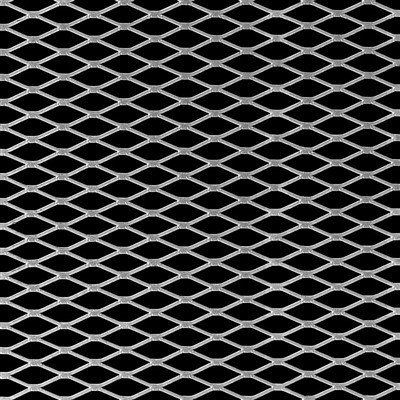
Next up, the mesh size and opening geometry. This is where a lot of people make another mistake: they think smaller openings are always better, but that’s not true for machine guards. Let’s break this down into two parts. First, the maximum opening size, which has to be small enough to prevent any part of a worker’s body—hand, arm, even a finger—from reaching into the machine’s danger zone. OSHA’s guidelines (we reference these constantly, by the way) say that for most machine guards, any opening larger than ½ inch is a risk for finger penetration. Wait, no—let me correct that: for machinery operating at high speed or with heavy impact, the opening has to be even smaller, usually ⅜ inch or less. For example, if you’re guarding a conveyor belt that runs at 100 feet per minute, you don’t want openings bigger than ¼ inch. On the flip side, if the openings are too small, you run into two problems: reduced airflow, which can cause the machine to overheat, and increased risk of debris buildup, which can eventually weaken the guard. We once had a client in a food processing plant who tried to use ⅛-inch expanded metal for a mixer guard. Within a month, food dust and small meat particles were clogging the openings so bad that the mixer overheated and shut down three times a week. They had to switch to ⅜-inch openings to fix the issue. Also, geometry matters. Diamond-shaped expanded metal openings are standard, but some people try to use square openings, which are weaker because the corners are sharp points that can crack under pressure. Stick to standard diamond or elongated diamond openings—elongated diamonds, in fact, are great for guards because they have a larger surface area for strength while still keeping openings tight enough to prevent access.
Mounting and structural integrity are the third big requirement, and this is where even experienced machine shops slip up. Expanded metal is lightweight compared to solid sheet metal, but that doesn’t mean it doesn’t need a sturdy frame to hold it in place. We’ve seen guards that were just a sheet of expanded metal bolted directly to the machine’s housing, and when a kickback hit, the entire sheet twisted and tore away. The right way is to build a frame out of angle iron or steel tubing that matches the expanded metal’s strength, then attach the expanded metal to the frame with bolts, rivets, or spot welds. Never use just screws—they’ll work loose over time from machine vibration. Also, the frame has to be designed so that even if the expanded metal is damaged, the frame won’t break apart. We recommend adding cross-bracing to the frame if the guard is larger than 4 feet tall or 2 feet wide. Another thing: clearance. The guard has to be far enough away from the machine’s moving parts so that even if the machine malfunctions and a part flies out, it doesn’t hit the guard with enough force to penetrate it. We usually tell clients to leave at least 6 inches of clearance for most machinery, and 12 inches for high-speed presses or rotary equipment. If you mount the guard too close, not only does it fail under impact, but it also gets in the way of maintenance—workers have a hard oiling or repairing the machine without removing the guard, which leads to them taking it off entirely. That’s a huge safety risk, so balance clearance with accessibility.
Corrosion resistance is a requirement that a lot of people don’t think about until it’s too late, especially for shops that operate in humid environments, handle chemicals, or work with outdoor machinery. Expanded metal made from plain carbon steel will rust over time if it’s exposed to moisture, and rust weakens the material significantly. We had a client in a shipyard that used uncoated carbon steel expanded metal for a crane hoist guard. Within two years, the guard had rusted through in several places, and a piece of the guard broke off during a lift, almost hitting a worker. To avoid this, you need to choose the right finish or material. For most indoor shops with mild conditions, a powder coat finish works great—it’s durable, resists chipping, and adds a layer of protection against minor corrosion. For outdoor use or shops that handle harsh chemicals, go with hot-dip galvanized expanded metal, which creates a thick, long-lasting zinc coating that stands up to rust. If you’re working in a food processing plant or a pharmaceutical facility, stainless steel expanded metal is the way to go—it’s non-porous, easy to clean, and won’t contaminate products, which is a double win for safety and compliance. We can supply all three of these finishes, so just let our team know about your operating environment, and we’ll help you pick the right one.
Compliance with industry standards is non-negotiable, and this isn’t just about checking a box for inspections—these standards are written in blood for a reason. OSHA’s Machine Guarding Standards (29 CFR 1910.212) lay out specific requirements for all machine guards, including those made from expanded metal. We also follow ANSI B11.0, which is the American National Standard for machine safety, because it gives more detailed guidance on impact resistance and opening sizes. A common mistake we see is shops making their own guards without referencing these standards, and then getting cited during OSHA inspections. For example, OSHA requires that machine guards be “securely fastened” and “cannot be easily removed by workers.” That means if you’re using expanded metal, your mounting has to be tool-dependent—no quick-release clips that can be undone with a wrench or even a screwdriver. Also, for machinery that’s considered “point of operation” equipment, like lathes or milling machines, the guard has to cover the entire danger zone, leaving no gaps that a worker can reach through. We’ve had clients who tried to leave a 2-inch gap at the bottom of the guard to let debris fall through—OSHA considers that a violation, because a worker could stick their hand in that gap. Instead, we recommend adding a debris collection tray below the guard to catch chips and shavings, which keeps the guard fully compliant and eliminates the gap.
Now, let’s talk about maintenance, because even the best expanded metal guard won’t last if you don’t take care of it. A lot of shop managers install a guard and then forget about it, but over time, expanded metal can get bent, cracked, or clogged with debris. We recommend inspecting all machine guards at least once a month, and after any major machine malfunction like a kickback or part failure. During inspections, check for bent sections of expanded metal—even a small bend can weaken the entire guard by 30% or more, according to our engineering team. Also, clean the openings regularly to prevent debris buildup, which can cause overheating on the machine or add unnecessary weight to the guard, putting more stress on the mounting. If a section of the guard is damaged, don’t try to patch it with a piece of wire mesh—replace it entirely with matching expanded metal. Patching creates a weak point that will fail under impact, and that’s a risk you can’t afford.
At the end of the day, expanded metal is one of the best materials for machine guards because it’s strong, lightweight, and allows for visibility and airflow, but only if you meet all the requirements we’ve covered here. We’ve helped thousands of clients get their guards right, from small fabrication shops to large manufacturing plants, and we know how to guide you through every step—from choosing the right gauge and opening size to making sure your guard is mounted and finished correctly to meet all safety standards. If you’re looking to upgrade your machine guards, or you’re not sure if your current ones are up to par, our team of experts is here to help. Don’t wait until an inspection or an accident makes you address this—reach out to us today to discuss your specific needs and get a custom quote for your expanded metal machine guards.
Perforated Metal References
OSHA. (n.d.). Machine Guarding Requirements. Retrieved from OSHA standards database.
ANSI B11.0-2020. (2020). Safety of Machinery – General Requirements for Establishing and Implementing Machine Safety. American National Standards Institute.
International Zinc Association. (n.d.). Galvanized Steel for Industrial Safety Applications. Retrieved from IZA technical library.
Expanded Metal Manufacturers Association. (2018). Specifications for Expanded Metal in Structural and Safety Applications. Retrieved from EMMA industry guidelines.
Anping Yilida Metal Wire Mesh Co., Ltd.
Anping Yilida Metal Wire Mesh Co., Ltd. is one of the most reliable expanded metal manufacturers and suppliers in China, also supports customized service. Please feel free to buy bulk high quality expanded metal made in China here from our factory.
Address: Wire Mesh Development Zone, Anping, Hebei Province, China
E-mail: sales@wiremesh-yg.cn
WebSite: https://www.yilidametal.com/
