If you’ve ever dug into the behind-the-scenes of biotech manufacturing—whether it’s for vaccines, cell therapies, or lab-scale research tools—you’ve probably focused on the flashy stuff: the CRISPR gene-editing tech, the cutting-edge bioreactors, or the precision pipettes that handle nanoliter volumes. But let me let you in on a little secret I’ve learned over the past decade as a release base paper supplier: some of the most critical components in biotech operations are the quiet, unassuming ones that no one talks about. Release base paper (RBP) is exactly that. For years, it flew under the radar, seen as just another consumable for labs or manufacturing lines. But as biotech has evolved—shifting from small academic research projects to large-scale, regulated commercial production—its role has grown exponentially, and today, it’s a non-negotiable workhorse across almost every segment of the industry. Release Base Paper
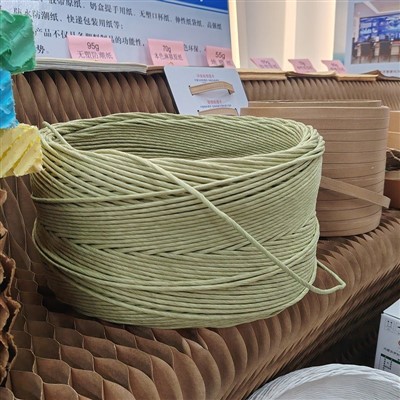
For context, let’s start with what RBP actually is, because that’s where a lot of the confusion starts. Unlike regular paper, which is designed to hold ink or be written on, release base paper is a highly engineered, low-shedding substrate. It’s made from bleached wood pulp, often processed with a very controlled fiber length and density, and it’s treated to have a smooth, consistent surface with a neutral or low-extractable profile. That last part is key: in biotech, even tiny amounts of leachables (like residual surfactants, dyes, or fiber fragments) can ruin a batch of a fragile biologic or throw off sensitive assay data. So RBP isn’t just paper—it’s a precision substrate engineered to meet the strict purity standards of regulated environments, from academic core labs to FDA-approved biomanufacturing facilities.
Let’s break down its most common applications in biotech, starting with the one I see every day in my work: diagnostic assay manufacturing. If you’ve ever taken a COVID-19 rapid test or a pregnancy test, you used a lateral flow assay (LFA). LFAs are the backbone of point-of-care diagnostics, and they rely on a layered structure: a sample pad, a conjugate pad, a nitrocellulose membrane, and an absorbent pad. But what holds all these layers together, and provides the rigid, flat base that makes the test strip easy to handle, store, and apply to packaging? That’s RBP. It’s the core substrate for assembling LFA strips, serving as a stable foundation that prevents warping or curling, even in high-humidity environments—something critical for tests that need to be shipped and used across different climates.
But it’s not just about being a stable base. RBP’s low-shedding properties are a game-changer here. When LFAs are manufactured, they’re often run through high-speed laminators and cut into individual strips. If the substrate shed even a tiny fiber or particle, that could clog the nitrocellulose membrane, block antibody binding sites, and lead to false negatives or invalid test results. Early LFA manufacturers tried using plain cardstock or even plastic as a base, but both had flaws: plastic is rigid but expensive and can’t be easily perforated for individual test strips, while plain cardstock sheds too many particles. RBP solved that. Its uniform, low-fiber-release surface means no contamination during assembly, and it’s flexible enough to be perforated without tearing or leaving rough edges. Over the past five years, as demand for rapid diagnostics surged during the pandemic, I saw my team ramp up RBP production specifically for LFA manufacturers, because no other substrate could match its balance of purity, cost, and processability. It’s not glamorous, but every diagnostic test strip on a shelf right now uses release base paper at its core.
Next up: cell and gene therapy manufacturing, one of the fastest-growing segments in biotech, where RBP is used in a very different way. Cell therapies—like CAR-T treatments for cancer—involve engineering a patient’s own immune cells, expanding them in bioreactors, and infusing them back into the body. A lot of the work happens in closed, sterile systems, and RBP plays a key role in labeling and tracking components of these systems. Wait, labeling, you say? But not just any labels. For regulated biomanufacturing, every component of a cell therapy process—from the bioreactor bags to the tubing sets—needs clear, permanent labeling that won’t fade, peel, or leach into the cell culture media. That’s where RBP comes in as a label liner.
Unlike standard label liners, which are coated with silicone and can leave silicone residue on the adhesive side, medical-grade RBP is treated with a release coating that’s compatible with pressure-sensitive adhesives (PSAs) used in biotech labels. It’s also designed to withstand the harsh conditions of autoclaving (high heat and pressure used to sterilize equipment) and gamma irradiation (another common sterilization method) without breaking down or releasing harmful compounds. For cell therapy manufacturers, traceability is non-negotiable—regulators like the FDA require full documentation of every step of production, so labels on bioreactor components, sampling ports, and media bags need to stay intact for years, even when stored at cryogenic temperatures (where temperatures can drop to -80°C). RBP-based liners ensure that the label is easy to apply during manufacturing, stays adhered, and doesn’t contaminate the sterile environment. I recently worked with a small biotech that was scaling up a CAR-T therapy and switching from a generic label liner to our RBP; they told us that the generic liner had been causing small adhesive residues on their bioreactor ports, which led to three months of failed batches. Once they switched to RBP, that problem vanished.
Another critical application is in lab-scale and manufacturing-scale filtration and chromatography. Chromatography is the process used to purify biologic drugs, like monoclonal antibodies or insulin, separating the target molecule from impurities using a stationary phase (often a resin) and a mobile phase (the buffer or solution). RBP isn’t the resin itself, but it’s used to prepare and process chromatography membranes and filters. High-performance thin-layer chromatography (TLC) is a common technique in biotech R&D for analyzing protein purity, and the TLC plates rely on a RBP base coated with a thin layer of silica or alumina. The RBP provides a rigid, uniform surface that ensures consistent spot resolution and accurate data—something that’s impossible to get with a regular paper base. Even in larger-scale chromatography, like in biomanufacturing, RBP is used as a liner for filter cartridges, providing a stable structure that prevents the filter media from shifting during use, which would reduce purification efficiency.
What’s especially interesting is that RBP’s role has expanded as biotech has moved toward single-use systems (SUS). Single-use bioreactors, tubing sets, and filters are now the standard for most new biomanufacturing facilities because they reduce the risk of cross-contamination, cut down on cleaning time, and lower operational costs. RBP is a key component of these SUS, used not just as label liners, but as a support structure for porous media like depth filters andtangential flow filtration (TFF) membranes. Depth filters are used to remove cell debris and large impurities from cell culture supernatants, and they’re often mounted on a rigid RBP frame to hold them in place during filtration. The RBP frame doesn’t interact with the filter media or the process solution, so it doesn’t affect filtration performance, but it makes the filter cartridge easy to handle and integrate into automated biomanufacturing lines. Before RBP was widely used for this purpose, manufacturers had to build rigid frames out of plastic or metal, which added cost and assembly time. RBP cut that down significantly.
Now, I know what some of you might be thinking: “This is all well and good, but why use paper when there are plastic alternatives?” That’s a fair question, and it’s something I’ve debated with other biotech suppliers and researchers for years. The answer comes down to three key factors: purity, cost, and sustainability. Plastic alternatives often leach phthalates, bisphenols, or other additives that are harmful to cell cultures or biologic drugs. Even the so-called “medical-grade plastics” can have trace extractables that are enough to invalidate a clinical trial batch or a commercial production run. RBP, on the other hand, can be processed to have extremely low extractable and leachable levels, meeting the strict standards set by the USP <661> and USP <87> for medical and biotech materials. It’s also more affordable than plastic or metal alternatives, which is a big deal for labs and biotechs working on tight R&D budgets or scaling up to commercial production.
And lately, sustainability has become a huge driver. Biotech companies, like every industry, are under pressure to reduce their environmental footprint. Plastic components in biomanufacturing are a major source of waste—every SUS bioreactor is a single-use plastic item that ends up in a landfill. RBP, by contrast, is biodegradable and recyclable, when it’s not contaminated with process materials. More and more biotechs are switching to RBP-based components to meet their sustainability goals, without sacrificing performance or purity. I recently worked with a mid-sized vaccine manufacturer that set a goal to cut plastic waste by 40% in its production lines; part of that plan was replacing plastic label liners and filter frames with our RBP products, and they’ve already seen a 15% reduction in single-use plastic waste from that switch.
Of course, RBP isn’t without its limitations, and that’s something I’m upfront about as a supplier. It’s not suitable for every application—for example, it can’t be used in high-temperature autoclaving that exceeds 121°C, unlike some engineered plastics, and it’s not ideal for ultra-porous chromatography resins. But for the vast majority of use cases in diagnostics, cell therapy labeling, filtration support, and TLC, it’s unbeatable. The key to getting the right RBP is customization—off-the-shelf paper won’t work, because biotech has such specific purity and performance requirements. That’s why my team works closely with each customer to tailor RBP to their needs: adjusting fiber density, surface smoothness, extractable levels, and even coating treatments to match their processes.
I’ve spent 12 years in this industry, and one thing that’s always struck me is how much of biotech’s success depends on the small, unglamorous components. The scientists who develop new gene therapies get all the credit, and they should—their work is transformative. But none of that work would be possible without the consumables that keep their experiments clean, their tests accurate, and their manufacturing lines running. Release base paper is one of those components. It’s not the most talked-about part of biotech, but it’s everywhere, quietly enabling the breakthroughs that are changing healthcare.
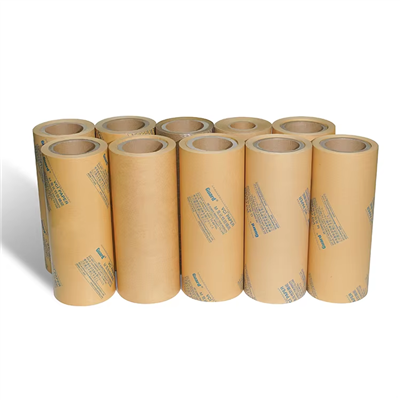
If you’re a biotech researcher, lab manager, or manufacturing operations lead looking to improve the performance, purity, or sustainability of your processes, I’d encourage you to take a closer look at release base paper. We’ve worked with everyone from small academic labs running early-stage CRISPR experiments to large commercial vaccine manufacturers scaling up production for global distribution, and we can help you find the right RBP solution for your specific needs. Whether you’re dealing with diagnostic assays, cell therapy labeling, chromatography, or filtration support, our team has the expertise to customize RBP to meet your requirements and help you avoid the costly issues that come with generic, off-the-shelf consumables. To discuss your current challenges and how RBP could add value to your operations, reach out to our team to connect.
Food Packaging Paper/ Food Packing Paper References
- USP <661> and <87>: Standard for Pharmaceutical Packaging Materials and Biological Reactivity Tests, 2023
- Lateral Flow Assays: Principles and Applications, Nature Reviews Methods Primers, 2022
- Single-Use Systems in Biomanufacturing: A Review of Current Practices and Future Trends, Bioprocess International, 2021
- Extractables and Leachables in Biopharmaceutical Processing, Journal of Pharmaceutical Sciences, 2020
- Release Base Paper: A Critical Substrate for Regulated Medical and Biotech Applications, Journal of Laboratory Automation, 2019
Senzo New Material Group Co., Ltd.
As one of the most professional release base paper manufacturers and suppliers in China, we also support customized service. Please rest assured to buy high quality release base paper made in China here from our factory. For price consultation, contact us.
Address: Dongying Bonded Area, Shandong, P. R. China
E-mail: info@aonuochina.cn
WebSite: https://www.senzopaper.com/
