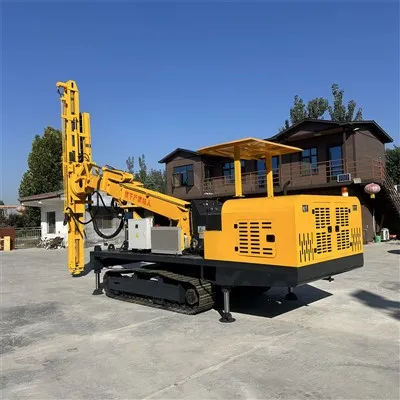
Hey there! I’m a guy in the tunnel drilling rig business. You know, these bad boys are like the unsung heroes of underground construction. They’re complex machines with a bunch of key parts that work together to get the job done. So, let’s dig into what are the main components of a tunnel drilling rig. Tunnel Drilling Rig
1. The Drill Head
First up, we’ve got the drill head. This is like the heart of the tunnel drilling rig. It’s where all the magic happens to break through the ground. The drill head holds the drill bit, which is the part that actually makes contact with the rock or soil. There are different types of drill bits depending on what kind of material you’re dealing with. For soft soils, you might use a drag bit. It’s got a simple design and can quickly cut through that kind of stuff. But when you hit harder rock, you’ll need a roller cone bit. These have rotating cones with teeth that crush the rock as they spin.
The drill head also has a motor. This motor is what gives the drill bit the power it needs to turn. Most modern drill heads use electric or hydraulic motors. Electric motors are great because they’re pretty clean and efficient. They don’t produce a lot of emissions, which is important when you’re working in enclosed spaces like tunnels. Hydraulic motors, on the other hand, are really powerful. They can handle more torque, which is useful when you’re drilling into tough rock.
2. The Drill String
Next, the drill string. This is basically a series of pipes that connect the drill head to the rest of the rig. The drill string does a few important jobs. First, it helps to transfer the rotational force from the drill head down to the drill bit. It’s like a long stick that allows the motor’s power to reach all the way to the cutting edge.
Another important function of the drill string is to circulate drilling fluid. This fluid, often called mud, has several purposes. It helps to cool down the drill bit, which gets really hot from all the friction. It also carries the cuttings, which are the bits of rock and soil that the drill bit breaks loose, back to the surface. This keeps the borehole clean and prevents the drill bit from getting clogged up.
The drill string is made up of individual segments that are usually connected by threaded joints. These joints need to be really strong because they have to withstand a lot of stress. Over time, the drill string can wear out, especially if it’s drilling through abrasive materials. So, regular inspection and maintenance are crucial to make sure it keeps working properly.
3. The Mounting System
Now, let’s talk about the mounting system. This is what holds the drill head and drill string in place and allows them to move around. The mounting system is usually attached to a platform, like a truck or a crawler. Crawler – mounted rigs are great for rough terrain because they can move more easily over uneven ground. Truck – mounted rigs are more mobile and can be driven to different job sites quickly.
The mounting system has to be very stable. It needs to keep the drill head in the right position while it’s drilling. To do this, it often has features like outriggers. Outriggers are like legs that extend from the rig to the ground. They provide extra support and help to prevent the rig from tipping over. Some mounting systems also have a swivel mechanism. This allows the drill head to rotate horizontally, which is useful when you need to change the direction of the borehole.
4. The Feed System
The feed system is another key component. This is what moves the drill string forward or backward as the drilling progresses. There are different types of feed systems, but the most common ones are hydraulic or cable – operated.
Hydraulic feed systems are really popular because they offer precise control. You can adjust the speed and force of the feed very easily. This is important because different materials require different drilling speeds and pressures. For example, when you’re drilling through soft soil, you might want to move the drill string forward more quickly. But when you hit hard rock, you’ll need to slow down and apply more pressure.
Cable – operated feed systems are simpler and cheaper. They use cables and pulleys to move the drill string. However, they’re not as precise as hydraulic systems. You might end up with a less accurate borehole if you’re not careful.
5. The Control Panel
The control panel is like the brain of the tunnel drilling rig. It’s where the operator sits and controls all the different functions of the rig. From here, the operator can start and stop the drill head, adjust the speed of the drill bit, control the feed system, and monitor the pressure and other important variables.
Modern control panels are often computer – controlled. They have touch screens and digital displays that make it easy for the operator to see what’s going on. The computer can also store data about the drilling process, like the depth of the borehole, the speed of the drill bit, and the amount of torque being applied. This data can be used to analyze the performance of the rig and make adjustments if needed.
6. The Power Supply
A tunnel drilling rig needs a lot of power to operate. There are different options for power supply. Some rigs are powered by diesel engines. Diesel engines are powerful and reliable. They can provide a lot of torque, which is important for drilling into hard materials. However, they also produce emissions, which can be a problem in enclosed spaces like tunnels.
Other rigs use electric power. Electric power is cleaner and more efficient. It can be supplied by a generator or by connecting the rig to the electrical grid. If you’re working in an area where there’s easy access to electricity, an electric – powered rig is a great choice.
7. The Mud Circulation System
As I mentioned earlier, the mud circulation system is very important. It’s responsible for pumping the drilling fluid, or mud, down the drill string and back to the surface. The system usually consists of a mud pump, a mud tank, and a series of pipes and valves.
The mud pump is what creates the pressure needed to move the mud through the system. It has to be powerful enough to overcome the resistance in the drill string and the borehole. The mud tank stores the drilling fluid. It also has a separator that removes the cuttings from the mud so that it can be reused.
The pipes and valves in the mud circulation system control the flow of the mud. They make sure that the mud goes in the right direction and at the right pressure. If there’s a problem with the mud circulation system, it can cause all sorts of issues, like a clogged drill bit or a collapsed borehole.
Why Choose Our Tunnel Drilling Rigs?
We’re a tunnel drilling rig supplier, and we offer top – notch products. Our rigs are built with high – quality components that are designed to last. We use the latest technology in our drill heads, so they can handle the toughest drilling jobs. Whether you’re working in soft soil or hard rock, our rigs have the power and precision you need.
Our feed systems are carefully calibrated to give you accurate control over the drilling process. You can adjust the speed and pressure with ease, making sure that you get the best results every time. And our control panels are user – friendly. Even if you’re new to operating a tunnel drilling rig, you’ll be able to figure it out quickly.
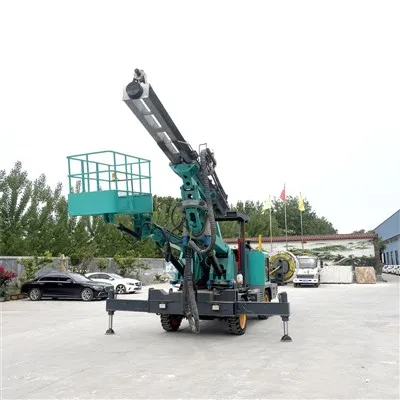
We also offer excellent customer support. If you have any questions or problems with your rig, our team of experts is just a call away. We can help you with installation, maintenance, and troubleshooting.
Solar Pile Driver If you’re in the market for a tunnel drilling rig, we’d love to talk to you. We can provide you with detailed information about our products, and we’re happy to arrange a demonstration so you can see our rigs in action. Don’t hesitate to reach out and start a conversation about your tunnel drilling needs. Let’s work together to get your project done efficiently and effectively.
References
- Bre Popple, Drilling for Beginners: A Guide to Understanding Drill Rig Components.
- James Smith, Modern Tunnel Drilling Techniques and Equipment.
Jining Tongzhao Machinery Co., Ltd.
Jining Tongzhao Machinery Co., Ltd. is one of the most professional tunnel drilling rig manufacturers and suppliers in China, also supports customized service with low price. Please feel free to wholesale advanced tunnel drilling rig for sale here from our factory. Contact us for pricelist.
Address: 160 meters north of Hongxiang Road, east of Jiamei Road, Jining Economic Development Zone
E-mail: 13668674521@163.com
WebSite: https://www.cntzmachine.com/
