If you’ve ever picked up a cereal box, a medication blister pack, or a frozen food carton with crisp, consistent text, logos, and barcodes, chances are it was printed not by a manual press, but by an automatic cartoning machine’s integrated printing system. As a supplier of these machines, I’ve spent thousands of hours walking factory floor teams through the ins and outs of this technology, and I’m here to break down how it works—no overly technical jargon, just real-world context that anyone involved in packaging production can use. Automatic Cartoning Machine
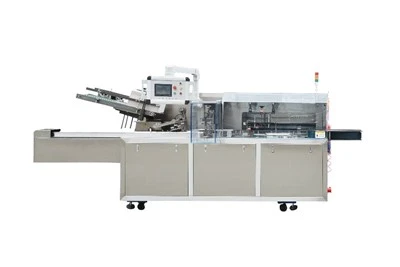
First, let’s set the stage: automatic cartoning machines aren’t just one big box-stuffing device (pun intended); they’re fully integrated packaging lines that form flat cardboard blanks, fold them into closed cartons, and often add printing or coding along the way. The printing system is not an afterthought—it’s synchronized to every step of the machine’s operation, which is why consistent, high-quality prints are possible even when the line runs at 150+ cartons per minute. When I first got started in this industry, I watched a client’s line shut down for three hours because their team tried to add an external printing unit to an older cartoner, not realizing that the machine’s timing was calibrated to integrate printing directly into its workflow. That misstep taught me that understanding the built-in printing system is non-negotiable for efficient production.
The core of most automatic cartoning machine printing systems falls into one of two main categories: flexographic printing (the most common for mid to high-volume consumer packaging) and inkjet printing (ideal for variable data like expiration dates, lot numbers, or batch codes). Let’s dig into each, starting with the system that powers most of the cartons you see on store shelves.
Flexographic printing is a relief printing process, and it’s a perfect match for automatic cartoning because it’s durable, cost-effective for large runs, and produces sharp prints on corrugated cardboard, coated paper, or paperboard. Unlike old letterpress systems that use rigid metal plates, flexo uses flexible rubber or photopolymer plates that are custom-made for each design. Here’s how the integration works on a modern cartoner: first, the flat cardboard blanks are fed into the machine’s infeed station, which straightens them and aligns them precisely to a registration mark—this is critical, because every print has to line up with the carton’s folds, windows, and cut lines. If the registration is off by even a fraction of a millimeter, a barcode might not scan, or a logo might be half off the carton.
Next, the blanks move along a series of rollers to the flexo print station, which is usually a modular unit mounted directly to the cartoner’s frame. The station has four key components: an anilox roller, a fountain roller, the print plate cylinder, and an impression cylinder. The anilox roller is covered in tiny micro-cells that hold a precise amount of ink—this is what keeps ink consistency across hundreds of thousands of cartons, no matter how long the run. The fountain roller applies ink evenly to the anilox roller, which transfers only the amount of ink the cells hold to the print plate cylinder. That plate has the exact design (logo, text, graphics) cut into its surface, so the inked areas transfer to the blank as it passes between the print plate and the impression cylinder, which applies consistent pressure to ensure the ink adheres to the cardboard.
What makes this system work for automatic cartoning, not just standalone flexo presses, is the synchronization to the cartoner’s line speed. Most modern flexo-equipped cartoners use servo motors to adjust print speed in real time, so if a carton jam slows the line by 10%, the print speed adjusts automatically to match, no smudges or misprints. I once worked with a snack food manufacturer that switched to a flexo-integrated cartoner and cut their printing downtime by 70%—before, they were running external presses and having to re-align every blank when changing runs, but with the integrated system, run changes take 15 minutes instead of two hours.
The other most common printing system for automatic cartoning machines is continuous inkjet (CIJ) printing, which is all about variable data. If you’ve ever noticed that every carton of allergy medicine has a unique lot number printed on the bottom, or that a bag of coffee has a best-by date specific to that production batch, that’s almost always CIJ printing. Unlike flexo, which is for fixed designs, CIJ is non-contact, so it can print dynamic, changing information on the fly without needing new plates or rollers.
Here’s how CIJ works in an integrated cartoning system: a small ink reservoir feeds a precise amount of ink through a tiny nozzle, and a piezoelectric crystal vibrates the ink stream at ultra-high frequency, breaking it into tiny, uniform droplets. Each droplet is charged as it passes through an electric field, and a deflection plate steers the charged droplets to the correct position on the carton (usually the side or bottom edge, where small variable data is placed). Uncharged droplets are recycled back into the ink reservoir, which keeps the system clean and reduces waste.
The integration of CIJ into an automatic cartoner is just as precise as flexo. The cartoner’s control system sends a signal to the CIJ printer with each new carton, so the variable data (lot number, expiration date, batch code) is printed in the exact same spot every time. If a carton is rejected for a fold or alignment issue, the system can send a signal to the CIJ unit to skip that carton, so you never have a rejected carton with a wrong or missing code. This is especially important for pharmaceutical and food packaging, where traceability is a regulatory requirement. I recently helped a pharmaceutical client update their line to add CIJ integration; before, they had to hand-apply batch codes to cartons, which led to 2% of cartons being mislabeled. After the update, that number dropped to near zero, and they passed their FDA audit with no issues.
Now, let’s talk about the often-overlooked supporting systems that make all this printing work, because even the best print technology will fail without these. First is the drying system. Cardboard is porous, so ink can smudge if it’s not dried immediately after printing. Most integrated cartoning printing systems use either hot air drying (warm, forced air that evaporates the solvent in the ink) or UV curing (ultraviolet light that hardens ink formulated with photo-reactive chemicals). UV curing is great for high-speed lines, because it dries ink in milliseconds, so cartons can move directly to folding without smudging. Hot air is more cost-effective for smaller runs, so many modern cartoners let you choose between the two drying systems based on production needs.
Second is the registration control system. We touched on this earlier, but it’s worth emphasizing: even small variations in carton blank thickness or line speed can throw off print alignment, so most automatic cartoning printing systems use optical sensors that scan registration marks on each blank. The sensors send data to the cartoner’s main control panel, which adjusts the print cylinder or inkjet position in real time to keep prints aligned perfectly. This is what makes high-volume runs consistent—no two cartons will have off-center logos or barcodes that won’t scan, even after running for 24 hours straight.
Third is the maintenance and quality check system. When you’re running 100+ cartons per minute, even a tiny clogged nozzle or dried ink can cause a print defect, so many of our cartoners have built-in self-cleaning systems for flexo anilox rollers and CIJ nozzles. For quality control, some machines also integrate camera systems that scan every carton’s print for smudges, missing text, or incorrect variable data, and reject any cartons that fail. That’s a huge win for manufacturers, because it eliminates the need for manual print inspections, which are slow and prone to human error.
A common question I get from potential clients is: “Which printing system is right for my operation?” The answer depends on a few key factors. If you’re producing consumer packaging (snacks, cereals, retail goods) with fixed designs and high volumes, flexographic printing is usually the best choice—it’s cost-effective, produces sharp graphics, and is reliable for long runs. If you’re in pharmaceuticals, specialty foods, or any industry that requires variable data (lot numbers, expiration dates, batch codes), CIJ is the way to go, and integrating it directly into your cartoner eliminates the need for separate coding equipment. I always advise clients to think about future growth too—many of our automatic cartoning machines have modular printing systems, so you can add CIJ capabilities later if you start needing variable data, instead of buying a whole new line.
Over my years as a cartoning machine supplier, I’ve seen firsthand how a well-integrated printing system can transform a packaging operation. A client that was struggling with slow run changes and high reject rates because they were using external printing equipment switched to a cartoner with integrated flexo and CIJ printing, and within six months, they increased their line output by 30% and reduced print-related defects by 85%. The printing system wasn’t just an add-on—it was the core of their efficiency and quality.
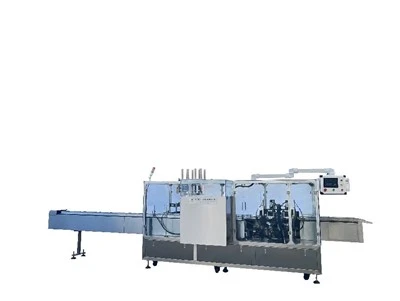
If you’re looking to upgrade your packaging line, or want to learn more about how an integrated automatic cartoning machine’s printing system can work for your specific production needs, I’d love to connect with you to discuss your goals, challenges, and budget. There’s no one-size-fits-all solution, and taking the time to match the right printing system to your products and volume will make a huge difference in your long-term success.
Drug Cartoning Machine REFERENCES
Automatic Cartoning Machines: Design and Functionality for Packaging Operations, Packaging Machinery Association, 2022.
Flexographic Printing for Paper and Board Packaging, International Corrugated Packaging Federation, 2021.
Continuous Inkjet Printing in Pharmaceutical Packaging, Journal of Pharmaceutical Packaging Technology, 2023.
Zhejiang Tuoyu Packaging Machinery Co., Ltd.
Zhejiang Tuoyu Packaging Machinery Co., Ltd. is one of the most professional automatic cartoning machine manufacturers and suppliers in China. With abundant experience, we warmly welcome you to wholesale durable automatic cartoning machine made in China here from our factory. Good service and quality products are available.
Address: Workshop No.12, No.11-19, Xinbin Road, Binhai New Area, Pingyang County, Wenzhou City
E-mail: 15868789201@163.com
WebSite: https://www.tuoyupack.com/
