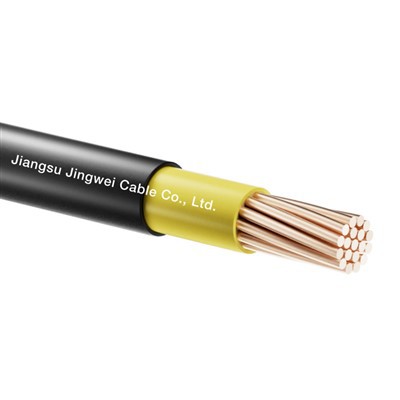
Overhead cables are a critical part of the electrical infrastructure, serving as the arteries that carry power from generation sources to consumers. As a supplier of overhead cables, I’ve witnessed firsthand the importance of these systems in maintaining a stable and reliable power supply. In this blog, I’ll explore how overhead cables handle power outages, the challenges they face, and the strategies we employ to ensure their resilience. Overhead Cable
Understanding Power Outages and Overhead Cables
Power outages can occur for a variety of reasons, including severe weather conditions such as storms, hurricanes, and ice storms. These natural events can cause damage to overhead cables through strong winds, falling trees, and ice buildup. Additionally, equipment failures, such as a broken insulator or a faulty transformer, can also lead to power disruptions. Over time, wear and tear on the cables themselves can result in insulation breakdown or conductor corrosion, further increasing the risk of outages.
Overhead cables are designed to withstand a wide range of environmental conditions and operational stresses. They are typically constructed from strong, conductive materials such as aluminum or copper, which are chosen for their excellent electrical conductivity and mechanical strength. The cables are supported by towers or poles, which are strategically placed to ensure proper tension and clearance. Insulators are used to prevent electrical current from flowing into the supporting structures and to protect the cables from environmental factors.
Detection and Response to Power Outages
One of the key challenges in handling power outages is quickly detecting the location and cause of the problem. To address this, modern overhead cable systems are equipped with advanced monitoring technologies. These systems use sensors to measure various parameters, such as current, voltage, and temperature, in real – time. By continuously monitoring these values, utility companies can detect anomalies that may indicate a potential outage.
Once a power outage is detected, the response process begins. Utility crews are dispatched to the affected area to assess the damage. For minor issues, such as a blown fuse or a loose connection, these crews can often make immediate repairs. However, in the case of more severe damage, such as a fallen cable or a damaged tower, more extensive repair work is required. This may involve replacing the damaged components, re – stringing the cables, or even erecting new poles or towers.
The use of emergency repair kits is also common in our industry. These kits are pre – assembled with all the necessary components and tools to make quick repairs to overhead cables. They are stored in strategic locations, allowing utility crews to reach them quickly when needed.
Preventive Maintenance Strategies
Preventive maintenance is crucial for reducing the frequency and duration of power outages. As an overhead cable supplier, we work closely with our customers to develop comprehensive maintenance plans. These plans include regular inspections of the overhead cable systems to identify any signs of wear, damage, or potential problems.
During these inspections, trained technicians carefully examine the cables, insulators, towers, and other components. They look for signs of corrosion, cracking, or mechanical damage. Any issues that are detected are addressed immediately to prevent them from escalating into more serious problems.
In addition to visual inspections, we also recommend the use of non – destructive testing techniques. These methods, such as infrared thermography and ultrasound testing, can detect internal damage or defects in the cables and components that may not be visible to the naked eye.
Another important aspect of preventive maintenance is vegetation management. Overgrown trees and shrubs can pose a significant risk to overhead cable systems. They can come into contact with the cables during storms, causing short circuits or damage. Utility companies typically have vegetation management programs in place to trim or remove trees and vegetation near the cables on a regular basis.
Resilience and Redundancy in Overhead Cable Systems
To enhance the resilience of overhead cable systems against power outages, redundancy is often built into the design. Redundancy involves having multiple paths for power to flow, so that if one cable or section of the system fails, power can still be supplied through alternative routes.
For example, a power grid may have multiple overhead cables connecting different substations. If one cable is damaged, the power can be rerouted through the other cables, minimizing the impact on consumers. Additionally, parallel circuits can be used to provide backup power in case of a failure in one circuit.
In some cases, microgrids are also being integrated into the larger power grid. Microgrids are small, self – contained power systems that can operate independently of the main grid. They can include local generation sources, such as solar panels or wind turbines, as well as energy storage systems. During a power outage, a microgrid can continue to supply power to a specific area, such as a hospital or a critical industrial facility.
The Role of Technological Advancements
Technological advancements play a significant role in improving the way overhead cables handle power outages. For instance, the development of smart grid technologies has enabled more efficient monitoring and control of the power grid. Smart grid systems use advanced sensors, communication networks, and data analytics to optimize the operation of the grid.
They can detect and isolate faults more quickly, allowing for faster restoration of power. Remote control systems also enable utility operators to remotely switch circuits and reroute power, reducing the need for on – site intervention.
In the field of materials science, new and improved cable materials are being developed. These materials offer better resistance to environmental factors, such as heat, moisture, and UV radiation. They also have higher mechanical strength and longer service lives, reducing the frequency of cable replacements.
Encouraging Contact for Procurement
As an experienced overhead cable supplier, I understand the critical role that overhead cables play in ensuring a reliable power supply. Our company offers a wide range of high – quality overhead cables that are designed to meet the diverse needs of our customers. Whether you are a utility company looking to upgrade your existing infrastructure, a construction company working on a new power project, or an industrial facility in need of a reliable power connection, we have the right solutions for you.
Our overhead cables are manufactured using the latest technologies and high – quality materials, ensuring excellent performance and long – term reliability. We also provide comprehensive technical support and after – sales service to ensure that our customers get the most out of our products.
Solar DC Cables If you are interested in learning more about our overhead cable products or would like to discuss your specific requirements, I encourage you to contact us. We are ready to work with you to develop customized solutions that meet your needs and budget. Let’s work together to build a more resilient and reliable power infrastructure.
References
- American Society of Civil Engineers, "Report Card for America’s Infrastructure".
- Power & Energy Society of the IEEE, various research papers on power grid reliability and overhead cable technologies.
- Utility companies’ annual reports on power outage management and infrastructure maintenance.
Jiangsu Jingwei Cable Co., Ltd.
As one of the leading overhead cable manufacturers in China, we warmly welcome you to buy bulk durable overhead cable made in China here from our factory. All cables are with high quality and competitive price. For pricelist and free sample, contact us now.
Address: Industrial Concentration Zone C, Guanlin Town,Yixing City, Jiangsu Province
E-mail: marilyn.wang@jingwei-cable.com
WebSite: https://www.jwcable.com/
